Splash - Wessex Archaeology's Coastal and Marine Archaeology blog

Splash

Book Launch - Submerged Prehistory

151 Submerged PrehistoryThe Wessex Archaeology Edinburgh office hosted a reception at the Royal Society of Edinburgh yesterday evening to celebrate the launch of the book Submerged Prehistory.

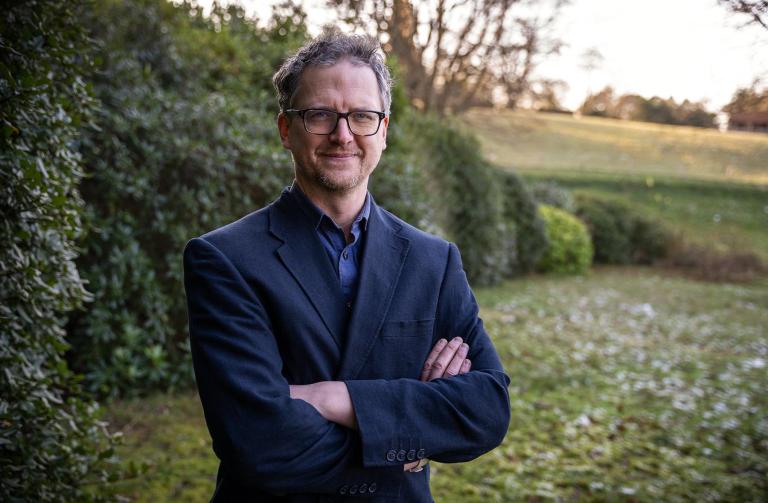
The book explores new developments in submerged prehistoric landscape research and its scope covers three continents. Jonathan Benjamin of Wessex's Edinburgh office is one the editors along with Professor Clive Bonsall and Catriona Pickard of Edinburgh University and Anders Fischer of the Heritage Agency of Denmark.

Speaking at the launch, which was attended by many of the Scottish heritage community and Wessex Archaeology's Scottish clients, Dr Benjamin said 'There is a growing awareness of the importance of submerged prehistory globally and right here in Scotland. As renewable energy is becoming even more important to the Scottish economy, more and more people are becoming aware of the importance of considering archaeology in the development planning.'

The book is available from Oxbow books and Wessex Archaeology's work on the important find of Palaeolithic hand axes from the North Sea is the subject of one of the papers.

155 The editors of "Submerged Prehistory" at the Royal Society, Edinburgh, May 2011

152 Submerged Prehistory book launch at the Royal Society of Edinburgh


Dornier 17

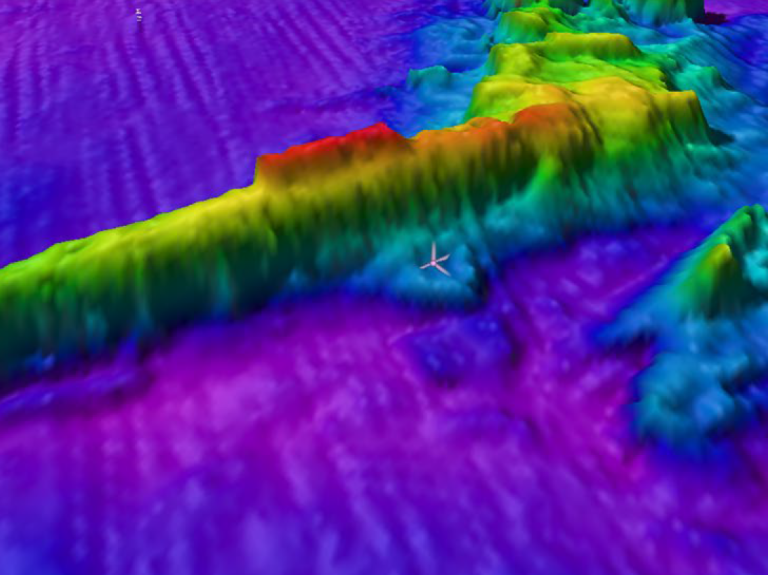
Wessex Archaeology has been working with the RAF Museum to investigate a rare example of a Dornier 17 German bomber submerged off the coast of Kent, south east England. The aircraft is thought to have been shot down in August 1940 during the Battle of Britain. It was found by a local diver. Wessex Archaeology was asked to carry out a geophysical survey and, earlier this year, to carry out a diving inspection. The RAF Museum plans to recover the aircraft for eventual display. More information, including a video of the aircraft underwater, can be found on the RAF Museum website.

Dive Videos Online

HMS DrakeFour videos exploring shipwrecks dived by Wessex Archaeology in support of the Protection of Wrecks Act 1973 are now online. The videos, available on YouTube, explore the sites of the Wheel Wreck, HMS/m Holland V submarine, HMS/m A1 submarine and HMS Drake which lies in Irish waters.

They were made by Jenny Austin and Alex Pope who joined Wessex Archaeology in October 2009 to gain work experience with the Coastal and Marine team.

European Maritime Day 2010

Wessex Archaeology is contributing to events marking European Maritime Day by holding a workshop in Paris on the archaeology of the Eastern English Channel. The workshop is taking place on 25 May and provides an opportunity for archaeologists and other marine researchers to share knowledge about a key area of sea lying between the UK and France. The workshop is taking place as part of the Marine ALSF project 'Use Many Times' that is re-examining high resolution data acquired for the Eastern English Channel Marine Habitat Map project in 2005-2006. At the time, the data were interpreted for geology, species and habitats; we are re-using this valuable data in 2010 to address archaeological concerns, including wrecks of ships and aircraft and evidence for prehistoric landsurfaces and deposits. Marine archaeology is intrinsically international in character. The Paris workshop provides an opportunity to share our inital results with colleagues and to gain insights from research from France. In turn, improved understanding will provide greater certainty in assessing the effects of marine aggregate dredging on the archaeological heritage in the Eastern English Channel. A further workshop will take place in the UK later this year.

Twelve New Appointments to WA Coastal and Marine

It is a busy time for WA's coastal and marine team and we are expanding our expertise and capability accordingly. Four new staff are joining our C&M archaeology team in Salisbury, three staff are joining our C&M learning and access team also in Salisbury, and three staff are joining WA C&M in Edinburgh.

In addition, our two EPPIC staff have appointments to WA C&M running on from their placements. This is a significant increase in our capacity, helped by the appointment of a C&M Business Manager and additional Project Managers in previous months. Our team now numbers 37 with further support from WA staff in other teams - and we have an awful lot of exciting archaeological projects to be getting on with...

Three Facets of Maritime Archaeology

Three Facets of Maritime Archaeology: society, landscape and critique
Antony Firth 1995

This essay arose from the session 'Theoretical Advances in Maritime Archaeology' at TAG '93 in Durham and was published on the research web pages of the Department of Archaeology, University of Southampton in March 1995.

As those pages are no longer available the essay has been republished here (April 2010) to maintain accessibility: Firth - 1995 - Three Facets of Maritime Archaeology 140410 (PDF)

Citation:
Firth, A. 1995, Three Facets of Maritime Archaeology: society, landscape and critique. Online. Available http://www.wessexarch.co.uk/blogs/splash/2010/04/14/three-facets-of-maritime-archaeology/

Explore the Seafloor - Wessex Archaeology Disseminate REC Results

Explore the Seafloor
 

Wessex Archaeology is delighted to announce that we have been commissioned by the Marine Environment Protection Fund (MEPF) to publicly disseminate the findings of four intensive Regional Environmental Characterisation (REC) studies. These studies were funded by the Marine Aggregate Levy Sustainability Fund (MALSF), which is also funding the dissemination project, and cover those areas commonly targeted for marine aggregates – namely the South Coast, East Coast, Humber and Thames regions. Each REC study incorporates ecology, geology and archaeology to deliver valuable scientific information about our seabed, in order that we can better protect the marine environment during offshore work.

Over the coming months Wessex Archaeology’s Explore the Seafloor project team will be meeting with all of the scientists involved in preparing the REC studies, so that we can deliver online resources and public roadshows exploring the project results.

Join the Explore the Seafloor project team at SEA LIFE centres across the country this summer to come face to face with the evidence and explore the science behind the RECs for yourself. Check back for further information and the dates of the roadshows, which will be posted on this website.

Maritime Archaeology Teacher's Packs Online

Tudor Seafaring Teacher's PackTime Travelling by Water, Wessex Archaeology’s coastal outreach programme, has produced three highly appraised teachers packs that are now available to download online. The packs explore the National Curriculum topics of Tudor seafaring, local history and WW2 through the interesting and evocative work of Wessex Archaeology’s coastal and marine team.

The activities and information in the packs are suitable for KS2 and KS3 classes, GAT groups, extra-curricular clubs, home-schoolers, Young Archaeologist’s Clubs and anyone who wants to learn more about our underwater heritage. They can be downloaded for free from the Time Travelling by Water website, from the learning pages of Wessex Archaeology’s website and from popular teacher’s resources websites such as Primary Resources and TES resources.

Launch of National Museum of Royal Navy

VictoryWessex Archaeology was very pleased to attend the launch of the National Museum of the Royal Navy (NMRN), which combines the museums of the Royal Navy, Royal Marines, Royal Navy Submarines and Fleet Air Arm. The new unified museum is intended to provide a strategic focus and improve the profile of naval heritage and collections, whilst continuing to develop the four sites (Portsmouth, Southsea, Yeovilton and Gosport).

Wessex Archaeology is frequently involved in the investigation of RN heritage – ships, submarines, aircraft and dockyards – so the new NMRN is very welcome. Speeches by the Government Minister and the First Sea Lord emphasised the important role of maritime heritage in today’s society and were followed by a rolling broadside from HMS Victory and a performance by the Royal Marines Band.

There is more information about the NMRN launch at Portsmouth Historic Dockyard, and a clip of HMS Victory’s broadside at The News.

Three more WA Staff qualify as Commercial Divers

Photo courtesy of the Underwater Centre, Fort William (www.theunderwatercentre.co.uk) Wessex Archaeology has three newly qualified commercial divers. The trio, Nic Bigourdan, Andrea Hamel and Kevin Stratford - all Archaeologists in our Coastal and Marine team - have spent five weeks at Fort Williams’s Underwater Centre in Scotland training for their HSE Surface Supplied commercial diving qualification.

Although we have supported several staff carrying out such training in previous years, this is the first time that Wessex Archaeology has fully funded the commercial course. Wessex Archaeology has been a registered commercial diving contractor since 1996 and is a full member of the Association of Diving Contractors.

Our diving team includes two supervisors, one of whom is also qualified as a Diver Medic. Equipped with surface-supplied equipment, digital video and acoustic tracking, WA carries out many forms of archaeological diving work. Investigations range from detailed surveys of historic shipwrecks for government heritage agencies, to checking suspected archaeological sites amongst anomalies identified by marine developers.

Syndicate content