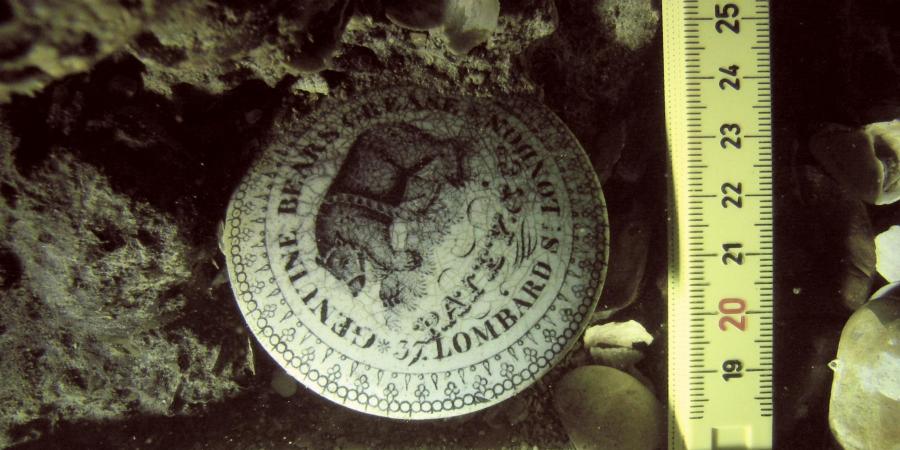
In 2002 Wessex Archaeology was commissioned by English Heritage, funded through the Aggregate Levy Sustainability Fund to undertake research into previously recovered archaeological artefacts from the sea. The purpose of the project was to collate and enhance records of artefacts from the sea and inter-tidal areas, held by the National Monuments Record (NMR) and selected coastal Sites and Monuments Records (SMRs) and Historic Environment Records (HERs) in England, and to record artefacts held in museums or private collections for inclusion in these databases.
This enhancement of the dataset for finds from marine contexts was intended to improve resources available to archaeologists and researchers tasked with compiling Environmental Impact Assessments to accompany marine aggregate licence proposals.
Project background
During the preparation of an Environmental Impact Assessment (EIA), a number of data sources are consulted to determine the quantity and nature of known or potential archaeological remains within an area. Sources consulted during the preparation of EIAs dealing with the marine and coastal environments include:
- The National Monuments Record (NMR);
- Local Sites and Monuments Records (SMRs), Historic Environment Records (HERs);
- The United Kingdom Hydrographic Office (UKHO);
- The Receiver of Wreck at the Maritime and Coastguard Agency;
- Local records offices, museums and libraries.
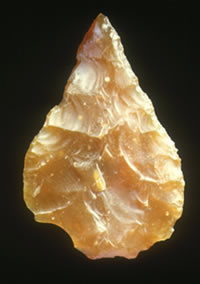
Artefacts and archaeological material from the coastal zone are important for understanding the archaeological potential offshore in the marine environment. Artefacts from the marine environment come to light less frequently than those on land; so the information from coastal artefacts regarding the nature and frequency of human activity in an area can be important in gauging the potential for previously unknown archaeological material to exist offshore.
To create a baseline of the known archaeology of an area it is necessary to examine all data sources. Many artefacts are recorded by one institution but not by another and different sources often describe artefacts in different ways, focusing on one detail at the expense of another. It then becomes necessary to look at several different sources in order to gain a complete picture of one findspot. Conversely, records may be duplicated within archives when information on an artefact has come from different sources and it has not been realised that only one artefact is in question.
In the case of some sources, like HERs, artefacts can be omitted from the records by virtue of the way in which those records were originally formulated. The local Sites and Monuments Records (SMRs), the precursors to HERs, were originally compiled from the collections of local museums but marginal finds, such as those which were undated or unprovenanced, were often excluded. In many cases stray finds such as these might be the only evidence of past activity at a particular point in the landscape and their archaeological value should not be underestimated.
The Artefacts from the Sea project sought to address these issues and improve the quantity and quality of the data. The project focused on two Pilot Study Areas: the Solent and Humber-Tees. Data from these areas was collated from a variety of sources; the collated data was examined and an effort was made to enhance it by eliminating duplications, omissions and other inconsistencies, and by adding new records that came to light during the process.
The National Monuments Record
The National Record of the Historic Environment (NRHE) is maintained by Historic England and represents the largest publicly accessible archive dedicated to the historic environment. The archive is based at the Historic England Archive in Swindon although many databases of information are held online.
The holdings consist of data on most known archaeological sites (both terrestrial and marine), modern and historic photography, almost total coverage of England in aerial photographs, a complete set of listed buildings descriptions, survey reports on specific buildings and archaeological sites, measured drawings, and a specialist reference library.
The NRHE holds a large number of monument records, often comprising a number of smaller, often temporally distinct, monuments. These ‘parent’ monuments were divided in the course of the Artefacts from the Sea project into individual records, created for each temporally and spatially distinct ‘child’. Thus, where finds might include Lower and Upper Palaeolithic material, with Mesolithic and Neolithic components, a minimum of four records might be generated. These are all cross-referenced within the database.
Data from the NRHE are often duplicates of ‘local’ sources, in particular within SMRs and regionally focused projects. Data from the NRHE, therefore, has been integrated with these other sources and duplicates have been removed in the Artefacts from the Sea dataset.
Receiver of Wreck
Under the Merchant Shipping Act 1995 is it is legal requirement to report all items of wreck found in or on the shores of the sea or any tidal water to the Receiver of Wreck. Wreck is defined as:
- Jetsam: goods cast overboard in order to lighten a vessel which is in danger of being sunk, not withstanding that afterwards it perishes.
- Flotsam: goods lost from a ship which has sunk or otherwise perished which are recoverable by reason of their remaining afloat.
- Lagan: goods cast overboard from a ship which afterwards perishes, buoyed so as to render them recoverable
- Derelict: property, whether vessel or cargo, which has been abandoned and deserted at sea by those who were in charge of it without any hope of recovering it.
The Receiver of Wreck is responsible for ensuring the rights of the finder and owner are upheld. This includes giving the legal owner the opportunity of recovering their property and ensuring that a salvage award is paid to the finder when due. The Receiver is based within the Maritime and Coastguard Agency (MCA) in Southampton, Hampshire although it deals with all reports of wreck from around the UK. Thus, the Receiver of Wreck can often provide a wide range of useful information concerning the nature of wreck material within a Study Area.
Sites and Monuments Records
SMRs were established in local authorities across England from the 1960s to fulfil an increasingly important role in land-use planning. The number of SMRs has increased over the years, with the emergence of Urban Archaeological Databases, the creation of new unitary authorities following local government reorganisation, and the development of SMRs by national parks, the National Trust and other land owners.
SMRs are a primary source of information on the local historic environment. They are fundamental to the conservation and management of the historic environment through the planning system. They are also a valuable resource for education and research. SMRs hold databases and collections that cover archaeology and archaeological investigations from the prehistoric period to the 20th century. Many SMRs also hold information about listed buildings and other aspects of the historic environment for their areas. This holistic approach has seen the development of Historic Environment Records (HERs) which allow a dynamic approach to heritage management, drawing on many datasets as well as point-type monument information.
The current non-statutory status of SMRs and HERs means that their funding and mode of operation varies greatly. For example, many SMRs do not hold data on sites or finds below the low water mark, except in cases where staff interest has prompted recording with a marine focus.
Links to SMRs and HERs are often featured on county council and city council websites as part of planning information. An interactive map of local authority historic environment services can be accessed via the HELM website.
Humber-Tees Study Area
Humber Archaeology Partnership, Humber SMR
The Humber SMR includes annotated maps and paper records. The maps were consulted to identify suitable records for inclusion in this project and 310 paper records were identified as potentially relevant. Altogether, 49 of these were subsequently rejected following a further assessment of relevance and 261 records were manually entered into the Artefacts from the Sea database.
The level of detail and type of information held within each paper record was found to vary considerably. Some site records solely contain references to published sources, with basic location and identification information. Other site records include detail about the features and finds from a site, with information from excavation record cards and excerpts from publications, in addition to references to other sources which could be consulted during enhancement.
During enhancement the number of records was expanded from 261 to 364 records.
North Yorkshire County Council SMR
NYCC SMR is held within an HBSMR system. A search of the database, defined by a 1km buffer around the coastline, generated 268 records. The HBSMR tables were integrated directly into the Artefacts from the Sea database.
The tables provided summary information about the monuments or sites, including dating information, locations, descriptions, basic topographic and geological information, related reference numbers and sources. The comprehensiveness of the records varied, reflecting the nature of the sites in question, although all records adhere to MIDAS standard definitions.
Following data validation and record enhancement 147 individual monument records remain in the Artefacts from the Sea database.
North York Moors National Park SMR
A buffer search of the NYMNP SMR database returned 41 records. Only seven of these were subsequently considered relevant for the purposes of the project.
The fields included in the NYMNP database provided the potential to record a very high level of detail about sites. Inevitably, however, many fields were empty as only data recorded at the time the find had been entered into the SMR.
The nature of the dataset was such that very little additional information was identified during record enhancement.
Tees Archaeology SMR
The search parameters for the Tees coastline comprised a rectangular polygon defined by NGR coordinates. A total of 250 records was returned from the Tees Archaeology database. The data was received as a Microsoft Excel table. Irrelevant inland finds were subsequently deleted using a 1km buffer inland of the high water mark. A total of 224 records were discarded, leaving 38 records that were entered in the Artefacts from the Sea database. Included in this figure are twelve additonal records that were identified through cross-references in the received data.
The records supplied through Tees Archaeology were clear, concise and consistent. Monuments are extensively cross-referenced, facilitating the enhancement procedure.
Following data validation and record enhancement the 38 original records have been expanded to 43 individual monuments.
Solent Study Area
HWTMA /Hampshire County Council AHBR
Digital data was selected for inclusion in the project by defining a polygon with a 500m buffer from the Mean High Water Mark along the Hampshire coast and a cut off to select only records dating earlier than 1540.
The HWTMA database, which holds the majority of marine-related data from the Hampshire SMR, contained 405 records and comprised summary information referring to paper archives or other sources. Of the 405 records received, 60 were relevant to the project, the remainder being modern installations or finds, wrecks, net fasteners or geophysical anomalies.
Another notable contribution of the HWTMA is the Bouldnor Cliff submerged Mesolithic landscape research project. Published information arising from the research has also been entered into the Artefacts from the Sea database.
The main body of Hampshire County Council AHBR data consisted of field-walking observations and records derived from museum accessions. This data added an impressive amount of new findspots to the Artefacts from the Sea database. In total, 521 records are referenced to Hampshire SMR. In many cases, however, further information was required to complete the records as only general details such as ‘Prehistoric Flints’ are recorded in the transferred data.
Isle of Wight County Council SMR
The Isle of Wight County Council holds digital records for the coastline and inshore waters of the Isle of Wight. IWCC were only able to contribute existing monument data recorded below the Mean Low Water. As this was not consistent with broader interpretation of coastal monuments as made available by other sources, the decision was taken not to include this dataset in the project.
Portsmouth City Council SMR
Altogether, 140 records were manually selected from Ordnance Survey (OS) record cards held by Portsmouth City Council SMR. The quality of recorded information varied and is largely a reflection of the information available at various times during the SMR’s history. It was noted that some record cards relate to multi-period sites or collections of artefacts from a number of locations. These were divided, where applicable, as part of the enhancement process.
From the information contained within the 140 records, 21 new records were created. Many of these were duplicated within the Hampshire SMR. In such cases the data was assimilated within a single record.
Southampton City Council SMR
Records were identified using a polygon around the River Itchen and River Test estuaries and the area of Southampton Water, up to the mean high water mark, and including any surviving cliffs or estuarine river banks where necessary.
The Southampton SMR has records of 38 findspots or sites in coastal locations. Attached to these sites are 51 individual artefact records. An assessment of the information held within the records suggests a high level of detail consistent with the high standards set within the SMR.
Portable Antiquities Scheme
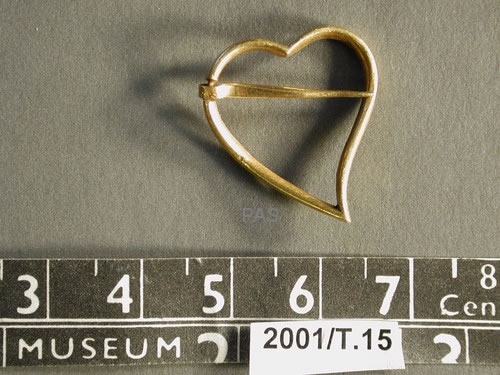
The Portable Antiquities Scheme (PAS) is a voluntary scheme for the recording of archaeological objects found by members of the public in England and Wales. It was established to promote the recording of chance finds falling outside the scope of the Treasure Act 1996, and to broaden public awareness of the importance of such objects for understanding our past.
At the heart of the PAS is a network of Finds Liaison Officers, who have a role in publicising the scheme, recording reported finds, giving advice, talks and lectures, and encouraging liaison between members of the public, metal detector users, archaeologists and museums.
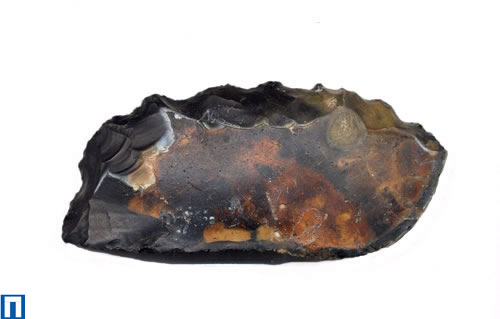
A database of finds reported under the scheme is maintained online and includes information on objects ranging from the Palaeolithic to around the 18th Century. This database also includes finds recorded in the Annual Treasure Report published by the Department of Culture, Media and Sport.
Apart from a number of references in the Humberside SMR, PAS data has not generally been incorporated within existing regional datasets. During this project, therefore, 15 new findspot records have been generated from the PAS data. The majority of these have been stray finds made at the coast by members of the public.
The United Kingdom Hydrographic Office
The United Kingdom Hydrographic Office (UKHO) is a government Trading Fund and part of the Ministry of Defence. Their primary activity is the provision of navigational products and services to the Royal Navy and the merchant marine although they are also a major provider of chart information for leisure purposes.
The UKHO Wrecks Information Service maintains a comprehensive database containing over 60,000 records of known wrecks, largely in UK territorial waters. Any member of the public who wishes to obtain information on a particular wreck, or on any number of wrecks within a Study Area, can do so by contacting the UKHO wreck office. All wrecks of navigational significance are also charted on the largest scale Admiralty Charts.
Pilot Study Areas
The Artefacts from the Sea project focused on two study areas on the eastern and southern coasts of England. Click on an area on the map to explore the enhanced data and find out more about the sources consulted.
Humber-Tees Study Area: defined as the coastline between the River Humber and the River Tees and corresponding to the dredging areas around the Humber Estuary and in the North Sea.
Hampshire-Sussex Study Area: defined as the coastline from Christchurch Bay in the west to the Hampshire/West Sussex border in the east and corresponding to the dredging areas around the Isle of Wight.
The landward limit of the study areas was delineated by the high water mark or cliff top although in some cases this limit was extended inland so that information could be included that would enhance understanding of certain areas. The seaward limit was not specifically defined although most institutions only hold data within the 12 mile territorial limit.
Hampshire-Sussex Study Area
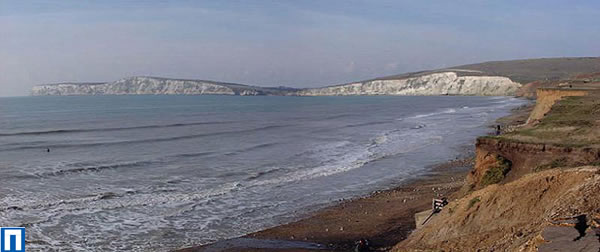
This study area was defined as the coastline from Christchurch Bay in the west to the Hampshire/West Sussex border in the east and corresponding to the dredging areas around the Isle of Wight.
The image below summarises the results for the Hampshire-Sussex study area. The original datasets are depicted in blue and the enhanced dataset is depicted in red. Place your cursor over the image to see the difference in records after data enhancement.
Data for both study areas was drawn from national datasets including:
National Monuments Record;
Portable Antiquities Scheme.
Data for the Solent study area was drawn from:
Local sites and monuments records:
Hampshire County Council AHBR: covering the majority of the Hampshire coastline excluding the coastlines of Portsmouth and Southampton;
Isle of Wight County Council SMR: covering the coastline and inshore waters of the Isle of Wight;
Portsmouth City Council SMR: covering the coastline within Portsmouth’s city limits, from Southsea along to Eastney;
Southampton City Council: covering the coastline within Southampton’s city limits;
Local museums:
Portsmouth City Museum;
St. Barbe Museum and Art Gallery, Lymington;
Private individuals:
Michael White, Pennington;
Archaeological projects:
Langstone Harbour Project;
Gardiner 1988 unpublished Ph.D. thesis: The composition and distribution of Neolithic surface flint assemblages in central southern England, University of Reading.
Gardiner 1988 unpublished Ph.D. thesis
The composition and distribution of Neolithic surface flint assemblages in central southern England
This research project was undertaken in the 1980s and catalogued over 40 flint collections from Sussex, Hampshire, and Dorset. The study focused upon the Mesolithic – Neolithic transition and included sites and finds extending into the Bronze Age. The catalogue contains artefacts from all of these periods.
Gardiner’s catalogue includes data on 295 stray finds in Hampshire, 43 of which were identified as coastal and 38 of which were found to be relevant to this project. The data was manually entered as new findspot monuments or appended to existing monuments as appropriate.
In addition to stray finds, relevant ‘sites’ from Gardiner’s catalogue were also entered. The sites are briefly described in terms of land use and geology, and a list of artefacts, ordered by groups, is given. Eight ‘sites’ were entered as new monuments or appended to existing monuments as appropriate.
Langstone Harbour Project (Allen & Gardiner 2000)
The Langstone Harbour Project was a multidisciplinary project researching the archaeology and past environment of Langstone Harbour. The project included an extensive programme of fieldwalking and the recording of collections held by organisations and private individuals.
Wessex Archaeology holds a digital version of the gazetteer compiled during the Langstone Harbour Project, which comprises summary information on sites and finds identified during the project. 148 records were relevant to the Artefacts from the Sea pilot study. 104 of these were already recorded by Hampshire or Portsmouth SMR. The remaining records have been entered as new sites which were then checked for duplication against other datasets.
Michael White
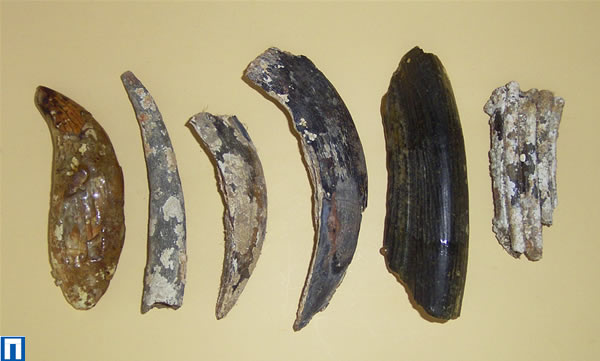
Michael White holds an extensive collection of Palaeolithic and Mesolithic flints, faunal remains and numerous other artefacts collected during 20 years as an oyster and clam fisherman in the Solent and Southampton Water. His sons Stephen and Phillip, who were also fishermen, have also contributed to the collection while Mr. White has also become the depository for finds made by other oyster fishermen in the area.
Mr. White’s passion for archaeological finds has ultimately prompted him to search specifically for artefacts within the peat beds of the Western Solent and he has also started collecting and metal detecting on land. Thus his collection includes a range of material from many different sites.
Stray finds are often of limited archaeological value due to the lack of associated contextual information. However, the artefacts recovered by fishermen can be given a degree of provenance correlating to the particular fishing ground in which they were found. Each find in Mr. White’s collection has been catalogued by place name correlating to a particular area of oyster dredging. With the assistance of Stephen White these areas were identified and the locations were manually plotted on large scale Admiralty charts. The areas were then digitised, effectively creating a series of adjoining zones, which will serve to accommodate future finds from the area.
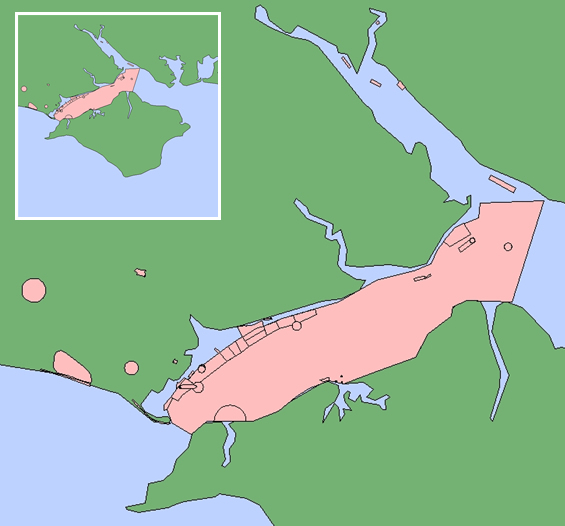
A total of 298 artefacts relating to 59 locations, of which 56 were in the study area, were identified and recorded. The majority of the finds were flint artefacts. Phil Harding, Wessex Archaeology’s flint expert, identified and recorded the finds for incorporation into the project database. The faunal remains were inspected by project staff, and photographs circulated to experts in quaternary zoology for identification. A catalogue of the finds was produced as a record of the collection in its own right and as a valuable resource for researching and managing the archaeological development of the Solent.
The collection demonstrates the value of stray finds to an assessment of archaeological potential. In grouping material by period and location it is possible to establish patterns of activity within a certain area and thus indicate what types of activity may have been taking place and at what time.
For example, the patterns of recovery within the White collection were identified by Michael and Stephen White and included:
-
most finds are in shallow water (up to c. 10m), except in the area around Bourne Gap Buoy;
-
the finds are made in distinctive zones separated by seemingly sterile areas (particularly along the Isle of Wight coast). This may, however, merely reflect the pattern of oyster dredging in the area;
-
there are two patches of submerged forest in the area and many of the artefacts were found within Peat deposits. The Peat is like gardening sphagnum, with inclusions that have been described as ‘straw like’.
Peat deposits or submerged forests represent one of the best forms of evidence for sea level change. Moreover, the faunal remains in the collection, most of which was recovered near the mouth of Newtown River on the Isle of Wight, include those of bison, hippopotamus and straight tusked elephant, providing an indication of the wildlife roaming the area prior to the Devensian glaciation.
The local maritime SMR, managed by the Hampshire and Wight Trust for Maritime Archaeology for Hampshire County Council, was found to contain 60 records relating to the Solent Study Area. The analysis of the Michael White collection has produced a further 56 findspots, effectively doubling the number of records relating to the marine historic environment in this area.
The information from the Michael White collection will be immensely valuable for future archaeological assessments in the area as well as providing a substantial resource for future archaeological research and for informing sport divers and fishermen in the area. The collection represents a broad selection of artefacts and ecofacts and contains flints from the Lower Palaeolithic to the Early Bronze Age, in addition to numerous finds up to the present day.
A PDF of the catalogue is displayed below, or you can download a PDF
Portsmouth City Museum
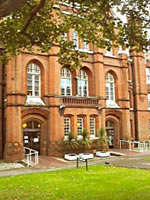
The accession books of Portsmouth City Museum are largely digitised. The selection of records was based on a series of key word queries. Place-names as well as topographic names (such as ‘harbour’, coast’ and ‘beach’) were combined with finds categories (such as ‘flint’, ‘bone’ and ‘coin’) to identify records relevant to the project.
In the Artefacts from the Sea database there are 258 records of finds accessioned in the Portsmouth City Museum, most of which have been identified from the Portsmouth SMR. These finds range in date from the Lower Palaeolithic to the Post Medieval period and include Lower Palaeolithic Acheulian handaxes, Mesolithic picks, Neolithic arrowheads, axes and adzes, Bronze Age knives and arrowheads, Romano-British pottery and Post Medieval tobacco pipes.
Southampton Museum of Archaeology
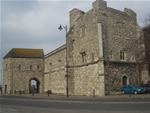
Southampton Museum of Archaeology runs an ambitious digitisation policy, and operates several databases including an accession ‘book’ index, an excavation database (feeding into the SMR) and a finds database accessible to the public on the internet and containing finds from excavations as well as other identifiable accessioned objects. It is therefore possible to obtain site information through the SMR and finds information directly from the internet, linked by museum accession number.
The sources were queried, using key word criteria, for provenance and date. The digital accession book produced a spreadsheet containing 2858 potentially relevant records including unprovenanced finds. From this initial data 2671 records were discarded leaving 187 records that were entered into the Artefacts from the Sea database.
Following data validation and record enhancement there are 136 records of finds from Southampton Museum in the Artefacts from the Sea database. These finds range in date from the Mesolithic to the Medieval periods and include Mesolithic scrapers, Neolithic polished stone axes, Bronze Age palstaves, Roman coins and Early Medieval pottery.
St. Barbe Museum and Art Gallery, Lymington
Information from the St. Barbe Museum and Art Gallery appears in the Hampshire SMR and HWTMA records. On inspection however an extra findspot was identified that was recorded in the museum archive updating the project database and raising the total number of findspots from two to three.
Humber-Tees study area
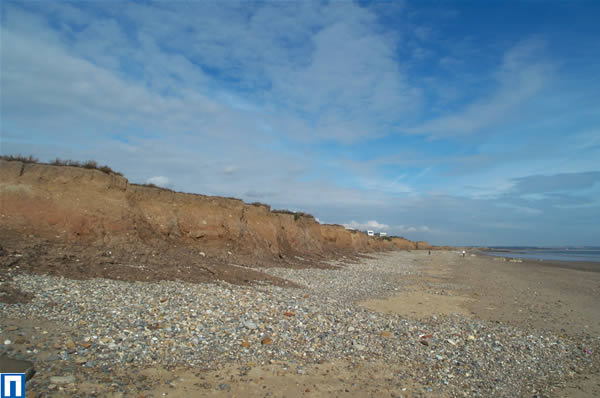
This study area was defined as the coastline between the River Humber and the River Tees and corresponding to the dredging areas around the Humber Estuary and in the North Sea.
The image below summarises the results for the Humber-Tees study area. The original datasets are depicted in blue and the enhanced dataset is depicted in red. Place your cursor over the image to see the difference in records after data enhancement.
Data for both study areas was drawn from national datasets including:
National Monuments Record;
Portable Antiquities Scheme.
Data for the Humber-Tees study area was drawn from:
Local sites and monuments records:
Humberside SMR: held by the Humber Archaeology Partnership and covering the coastline from the north side of the River Humber to the northern coast of Flamborough Head;
North Yorkshire County Council SMR: covering the North Yorkshire coastline to the south of the North York Moors National Park;
North York Moors National Park SMR: covering the coastline from Scarborough to Saltburn;
Tees Archaeology SMR: covering the coastlines of Hartlepool and Redcar and Cleveland.
Local museums:
Hull and East Riding Museum;
Rotunda Museum.
Private individuals:
Rodney Mackay, Beverley;
Archaeological projects: Humber Wetlands Project.
Hull and East Riding Museum
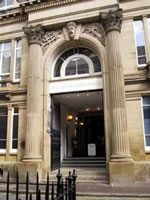
The Hull and East Riding Museum opened in 1925 as the Museum of Commerce and Transport. During the Second World War the museum suffered extensive bomb damage and was closed until 1957 when it was re-opened as the Archaeology and Transport Museum. In 1989 the transport collection was re-located to form the Streetlife Museum of Transport. The remaining archaeological collections formed what is now the Hull and East Riding Museum.
The museum houses a collection is of international importance, including the Bronze Age figures from Roos Carr, a Celtic chariot burial and the boats from Hasholme (Iron Age) and North Ferriby (Bronze Age).
The core of the collection comprises material collected from the Yorkshire Wolds by the 19th century antiquarian J.R. Mortimer, secured for the museum by Thomas Sheppard, the first curator of the museum. The Mortimer collection comprises some 66,000 artefacts derived predominantly from surface finds and more than 360 controlled excavations. During the war the collection was moved to another depository and thus survived the bomb damage which impacted other museum collections.
The records accompanying the Mortimer collection contains good quality contextual information and much of the collection has been published in some form. Unfortunately, the paper archive is in poor condition complicating attempts to record the collection in detail. Only part of the collection originates from coastal locations.
The 1930s and 1940s saw groundbreaking excavations at various locations which recovered Prehistoric, Romano-British and Anglo-Saxon assemblages, particularly from the Humber shore.
The museum is situated close to the Holderness coastline, the most rapidly eroding coastline in Europe. The clay cliffs contain an assortment of archaeological material which is deposited on the beaches as the cliffs erode. The rich collections and high-profile activities of the local museum has prompted a comparatively high awareness of archaeology and the importance of reporting finds amongst the local public and many finds have been reported and handed in to the museum.
As part of the Artefacts from the Sea pilot study Wessex Archaeology staff identified all the records contained in the museum archive concerned with artefacts found on or near the coast. Relevant index cards and entry forms (forms used when an artefact is presented to the museum, regardless of whether it is subsequently accessioned by the museum or returned to finder) were extracted from the archive and manually entered into the project database. In addition, a section of the museum accessions that was digitised in January 1993, and included in the project database for the Humber Wetlands Project (Van de Noort & Davies, 1993:41-42) was also incorporated within the Artefacts from the Sea database.
The records derived from the museum search were matched against SMR, NMR, PAS and Humber Wetlands Project records as well as published sources to identify corresponding or duplicate records that could be rationalised into one monument entry in the database. Where these existed, any new information was added to the record; otherwise, an entirely new record was created.
The Museum archive provided the core of the Humber SMR when it was established, although finds of ‘marginal value’ were omitted along with finds not attributable to parish, which included finds from the seabed. This, together with the highly successful open-door policy operated by the museum, meant that a large number of coastal artefacts recorded in the museum archive were not included in the Humber SMR. In total, 68 records were added to the dataset. These sites range in date from at least the Palaeolithic to the Post Medieval period and include findspots of mammoth remains, a Romano-British or Iron Age settlement and evidence of Neolithic settlement.
Humber Wetlands Project
The Humber Wetlands Project was commissioned in 1992 by English Heritage to provide an assessment of the Humber wetlands (Van De Noort & Davies, 1993:2-4). The 1992/1993 archaeological assessment of archaeological and palaeo-ecological data generated by a large number of institutions and individuals active within the defined region (based upon the 10m OD contour of land within the Humber wetlands). This part of the study was therefore largely desk-based, drawing heavily on previously published material. The project was housed in the School of Geography and Earth Resources of the University of Hull.
An archaeological survey of the wetlands of Holderness was carried out between August 1994 and March 1995 and ran alongside a palaeo-environmental survey aimed at enhancing understanding of regional environmental change with particular reference to human settlement and activity (Van de Noort & Ellis, 1995:151). The archaeological survey primarily took the form of field-walking with specific site visits to archaeological and geomorphological features, and a survey of the coastal and estuarine foreshores and adjacent areas.
Data relevant to the Artefacts from the Sea project was obtained from the published reports: Wetland Heritage. An archaeological assessment of the Humber Wetlands by Robert Van de Noort and Paul Davies (edited by Stephen Ellis) (1993) and Wetland Heritage of Holderness. An Archaeological Survey edited by Robert Van de Noort and Stephen Ellis (1995).
The Humber Wetlands Project archaeological assessment (Van de Noort & Davies 1993) was used to expand and check existing records and to identify possible additional records for coastal sites in Holderness that had not been obtained from SMRs and other sources. Further records were created to incorporate findspots identified by fieldwalking and coastal survey as part of the Humber Wetlands Project archaeological survey (Van de Noort & Ellis 1995).
Rodney Mackey, Beverley
Mr. Rodney Mackey is an experienced amateur archaeologist and active member of the East Riding Archaeological Society. Though not holding any collections himself, he is extremely knowledgeable about archaeological activity in the area.
Mr. Mackey was able to point to a site, excavated by him, containing two monuments not yet entered in the Humberside SMR.
Rotunda Museum, Scarborough
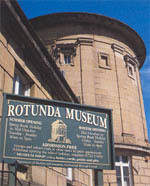 A search of the Rotunda Museum archive was conducted with the help of the curator, based on place name. Seven records were identified, one of which was found to be inland of the study area.
As part of the enhancement process five of the remaining six sites were expanded to produce a total of 14 sites that were added to the project database. These sites range in date from the Upper Palaeolithic to the Medieval period and include findspots of Upper Palaeolithic artefacts, a Neolithic stone tool production site, Bronze Age barrows and Medieval burials.
The records are attributed with place name, location, events and contacts. The contacts include correspondence, which has identified and clarified other sources.
Database
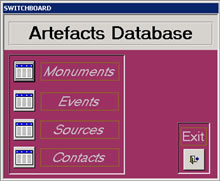
To facilitate the collation and enhancement of data gathered from different sources, a project database was constructed using Microsoft Access.
Many SMRs and HERs now use HBSMR (Historic Buildings, Sites and Monuments Record), a comprehensive database, GIS and photographic data management system developed by ExeGesIS SDM Ltd in partnership with the NRHE and the Association of Local Government Archaeological Officers (ALGAO). The system complies with the Monument Inventory Data Standard (MIDAS) developed by the Forum on Information Standards in Heritage (FISH) to set out what sort of information should be recorded in heritage inventories.
The Artefacts from the Sea database is MIDAS compliant and designed to facilitate the transfer of data to and from HBSMR datasets. The table and attribute structure was kept the same as HBSMR and descriptive thesauri from ExeGesIS, the NRHE and Museum Document Association were incorporated to ensure consistent terminology. However, in addition to the Monument, Event and Source tables recommended by MIDAS, the Artefacts database also incorporated Find and Contact tables in accordance with the project’s emphasis on artefacts and data enhancement.
MIDAS describes a 'monument' as a site of past human activity defined spatially and temporally. Hence, a monument will represent a single phase of activity at a specified location; and multi-period and multi-use sites will require a number of related monuments representing each phase and type of activity. For example, a findspot in which artefacts from both the Upper Palaeolithic and Mesolithic periods are found would require separate records for the different periods.
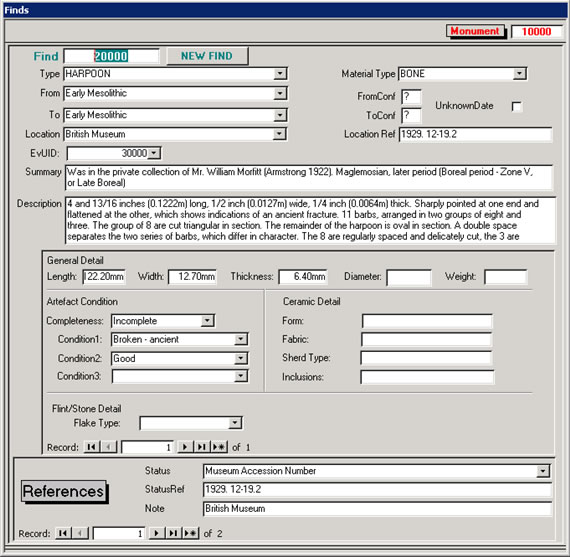
MIDAS defines an 'event' as any activity related to a monument, such as an excavation or survey or a research project. A source record should be created for any information relating to the site, such as published and unpublished documents or aerial photographs of the site.
The Artefacts from the Sea database requires that a 'find' record is created for each find, or set of finds, associated with a particular monument. For example, a site containing several Mesolithic microliths would require separate finds records, for each individual artefact. The finds record form is designed to encourage the recording of a higher level of detail about artefacts than is usually found in monument-oriented databases.
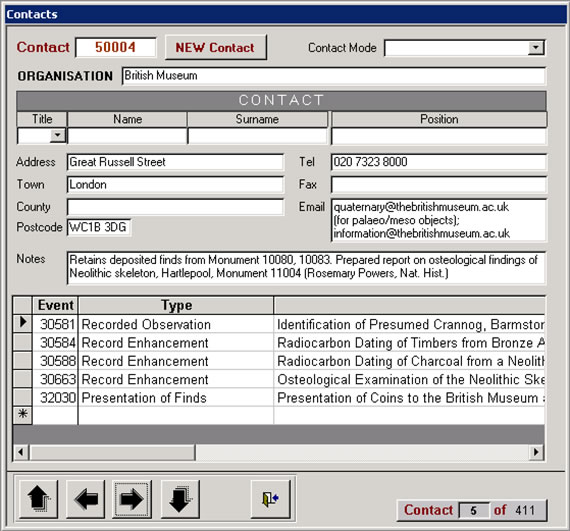
Particularly important is information relating to the condition of the artefact, as it holds the most tangible clue, where no contextual information exists, as to whether the find was made in situ or ex situ. This becomes important when assessing whether a stray find is a valid source for mapping past activity in an area. For example, heavily calcinated and rolled flint artefacts would have been exposed for a long time and could have come from a wide area, repeatedly eroded and redeposited as sea-level fluctuates or transported by a sail of seaweed. Fresh dark flint artefacts with sharp edges, on the other hand, are a strong indicator of a previously sealed deposit being under active erosion in the close to the findspot.
A 'contact' record is created for each institution, group or private individual that may have been associated with a monument. For example, a monument may be recorded in the NMR and/or SMR, discovered by a particular individual, excavated by an archaeological contractor and published by a certain archaeologist, while the finds may be deposited in a local museum. Recording these contact details facilitates the tracking of information and artefacts and may highlight the individuals most knowledgeable about a certain area.
Enhancing records
The first stage of the enhancement process comprised the validation of data obtained from participating institutions. Fields were checked to ensure that transfer from the original records to the project database had taken place without any data loss, and that the data had been transferred to the correct fields. Records were checked for their spatial and temporal relevance to the project, duplicate records were eliminated and data from different sources was assimilated.
The enhancement of data within each record commenced with spelling and grammar checks, and abbreviations were eliminated where appropriate. Each record was then expanded where necessary with the creation of event, source, find or contact records where information was available within the descriptive text. Checks were also made to ensure that the records were compliant with MIDAS recommendations. For example, additional records were created for the separate phases of multi-period and/or multi-use monuments that were previously recorded as single entries.
The final stage was to access secondary sources in order to clarify existing information or to add substantive new information. Published works referenced within the datasets were consulted where possible; and any new references cited in these works could also be checked for additional data.
Once the enhancement was complete the data was returned to the participating institutions. The database was divided into regional datasets for return to the relevant participating institutions. The data was supplied as a stand alone database and as Microsoft Access tables. Institutions using HBSMR or similar systems were able to incorporate the data into their own databases while those using paper recording systems could use the Artefacts from the Sea database as a stand alone record.
Monument 11000 was recorded within the Tees SMR (SMR 1603) as follows: ‘Remains of fens and birch and alder forest in peat bed. Area around Seaton Carew excavated in 1990 by C.C.A. prior to construction of sea defences (ref. 1)’ Ref. 1 states ‘Report Forthcoming’. It also gives grid reference, district, parish, period, condition, notes SSSI designation, a site visit, location of some slides and refers to two excavations (1990 and 1995). A number of other monuments from the peat beds are described under other SMR numbers, which relate directly to this monument (as do a number of associated sources). This enabled the limits of the monument to be redefined and provides information about its relation to incorporate yet more monuments. In the course of enhancement, one SMR source lead to the creation of two additional monuments, four additional events and eight source references. The information about and details of the original monument expanded to include a description, the extent and character of the submerged forest. This additional information greatly increases the understanding of the area that can be obtained directly from the SMR. |
Results
The Artefacts from the Sea pilot study demonstrated how previous records of artefacts found in coastal and marine contexts could be enhanced, and how access to such records could be improved, in order to facilitate the formulation of an archaeological baseline and impact assessment.
During the pilot study, records of archaeological material from coastal and marine contexts were frequently found to be inconsistent and lacking in detail in comparison to records of terrestrial archaeology. The enhancement indicated the potential of future projects in enabling a more fundamental reappraisal of England’s early history in which today’s coast need no longer be a boundary to understanding or proper management.
In order to assess the value of the project, comparisons were made between a search of the SMR and a search of the enhanced dataset for an archaeological assessment of an aggregate licence application area.
An existing desk based assessment, ‘Area 446: North West Rough’ was checked for the number of monuments that were obtained from the SMR search conducted for the assessment. The same study area was then queried in the Artefacts from the Sea database. The original SMR query produced 42 Palaeolithic and Mesolithic monument records in a polygon spanning an area 2-17km inland. Two of these monuments are within the 1km coastal buffer zone addressed by this project. Within this same 1km buffer zone, the enhanced Artefacts from the Sea database holds four monuments that are Mesolithic in date, and a further 27 monuments dated from 4000 BC or earlier, i.e. potentially dating from the Palaeolithic or Mesolithic. Only one monument record is shared by the two datasets, meaning that the present study has added 30 new records to inform the assessment of North West Rough. This example shows that the enhancement process has been highly effective and demonstrates the usefulness of data enhancement programmes to future marine aggregate-related assessments. |
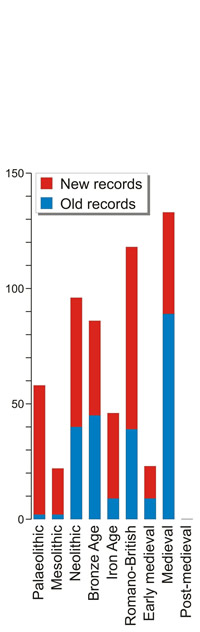
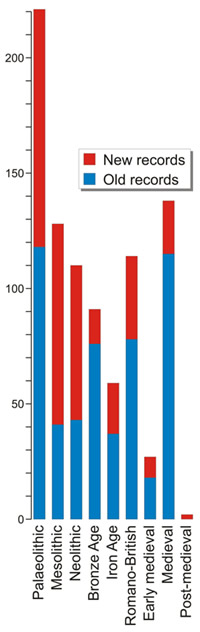
A breakdown of the results of the data enhancement process is illustrated in the bar charts on the left and on the right. Each chart shows the number of records, split by period, for the two study areas. The number of records from the original dataset is reflected by the blue segments of the bars and the additional data after enhancement is illustrated in red.
The degree to which original records have been enhanced demonstrates how much is to be gained. The enhancement of information by the Artefacts from the Sea project will improve understanding, conservation and appreciation or the marine historic environment through people accessing the enhanced data in the course of their day-to-day use of SMRs and the NMR.
Further research
The Artefacts from the Sea pilot study focused upon existing collections and records of sites and finds, rather than seeking new reports of discoveries from the public. However, the data collated during the course of this project emphasises the key role that the general public has played in bringing artefacts to the attention of archaeologists. The Michael White collection, for example, is testament to the impact that individual members of the public can have on the data available to archaeologists. There is substantial scope, therefore, for further projects to heighten awareness of the need to report finds from coastal and marine contexts, and for recording collections belonging to the private individuals.
In 2005, Wessex Archaeology developed a Protocol for Reporting Finds of Archaeological Interest for English Heritage. The Protocol focuses on finds made by members of staff employed by aggregate dredging Companies, on board dredging vessels, and at wharves. Wessex Archaeology has been commissioned to provide an Implementation Service to facilitate use of the Protocol by the marine aggregate industry.
In facilitating the reporting and recording of artefacts from the sea and by incorporating such data within the NMR, SMRs and HERs, it is hoped that our knowledge of coastal and seabed archaeology can be expanded to better inform archaeological assessments for coastal and marine EIAs.