The identity of the Sanday Wreck, discovered in February 2024 and rescued by the community on the island of Sanday in the Orkney Islands, has been revealed thanks to the combined efforts of archaeologists from Wessex Archaeology, scientists from Dendrochronicle, and a team of dedicated community researchers with support from Historic Environment Scotland.
All available evidence points to the wreck being the Earl of Chatham, a London whaling ship that had another life as a Royal Navy vessel called HMS Hind before it became a whaler. The Earl of Chatham was wrecked on the island in March 1788 with 56 sailors on board whilst making the voyage from the River Thames to the Arctic for the spring/summer whaling season. All 56 members of its crew survived.
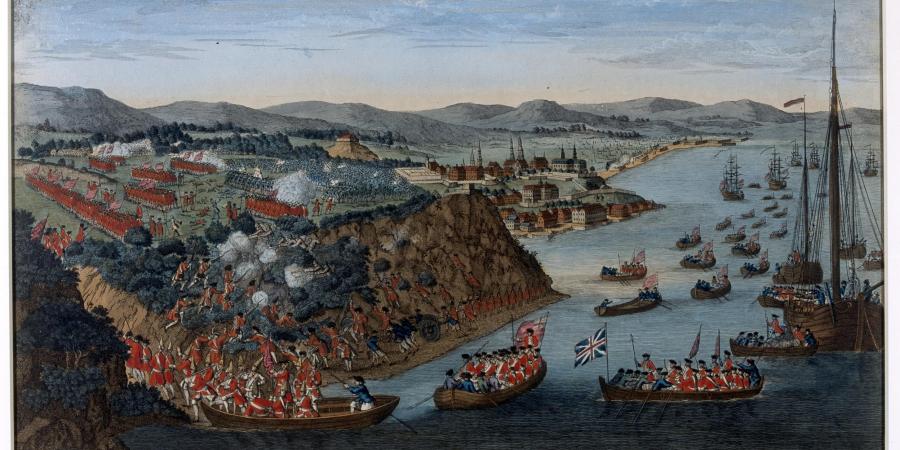
It was built in Chichester in 1749 for the Royal Navy and as HMS Hind, it saw many years of active service including conflicts such as the sieges of Louisbourg and Quebec in the 1750s and in the American Revolutionary War in the late 1770’s.
Once it was decommissioned, it was sold and renamed the Earl of Chatham, becoming a mighty 500-ton whaling ship. This was common for Royal Navy ships as their excellent build quality allowed them to withstand the icy conditions of British whaling routes. As the Earl of Chatham, it completed four seasons in the Arctic before ultimately meeting its end in the Bay of Lopness in March 1788.
Ben Saunders, our Senior Marine Archaeologist, said: “It is thanks to our dedicated team of community researchers and the evidence they have gathered that means we have been able to identify the Sanday Wreck with a reasonable degree of confidence. Throughout this project, we have learned so much about the wreck, but also about the community in Sanday in the 1780s. Sanday was infamous for shipwrecks at the time, called ‘the cradle of shipwrecks in Scotland’, but the community was equally well-known for its hospitability as it looked after sailors who fell afoul of the area’s stormy seas.”
The ship's captivating history offers a view of the global influence Britain was projecting at the time. Its story reflects the impact of economic upheaval, social evolution, the intensification of environmental exploitation as part of the industrial revolution, political turmoil powered by war and the realities of colonial expansion.
A process of elimination: Narrowing the search
Using samples taken from the timbers, experts from Dendrochronicle analysed tree rings to determine its age and where it came from. The results gave a range of definite felling dates between 1748 and 1762 for some and 1750’s-1780’s for others and confirmation that the wood used to build and repair the ship came from the south and southwest of England. This crucial evidence equipped the community of 20 dedicated community researchers, who were led by Wessex Archaeology, with key information to begin their own voyage of discovery through local and national records and archives.
Narrowing down the shortlist using the scientific results to filter out impossible and unlikely candidates, the research team, which includes members of Sanday Heritage Group and Orkney Archaeology Society, accessed further archive material extending back to 1764, meaning they were able to intensify their search and hone in on specific details of potential candidates like construction methods, materials used and the size of the ship to lead them to the most likely candidate.
By the end of their journey, having meticulously examined all available information and options, one candidate stood out: the whaler Earl of Chatham. Further research into naval records at The National Archives and National Maritime Museum in London unravelled the ship’s past even further, that the Earl of Chatham had previously been HMS Hind, a Royal Navy ship with a notable past.
Piecing together the past: From war to whaling
HMS Hind was a a sixth rate 24-gun friggate, meaning it wasn't a vast battleship but a fast and relatively moveable large sailing ship that operated as a convoy escort or a counter-privateer cruiser depending on the Navy’s needs during conflict.
War and whaling went hand-in-hand in Britain in the mid to late 1700’s. In times of conflict, the Royal Navy saw the fledgling whaling industry as a source of talented mariners to recruit from, and in turn records show that when conflicts ended and those same mariners sought work, peaks in whaling occurred, helped by access to sturdy, well-built Royal Navy ships that were no longer needed, but could handle the demands of the icy seas of the Arctic. A perfect storm.
Researchers followed the trail and discovered that after its long naval career HMS Hind was considered surplus to requirements and was sold out of the Royal Navy in January 1784. The London shipowner and merchant Theophilus Pritzler bought it and it embarked on its second career as a whaling ship, the Earl of Chatham, which would ultimately lead to its wrecking in Orkney.
In this same period, across Britain, the industrial revolution was picking up significant pace. Whale oil had become one of the key components of many of Britain’s new industries and millions of domestic and social technologies. Machinery demanded ever-increasing quantities of whale oil as lubricant, it fuelled lamps and streetlights, and it was relied upon to produce woollen textiles. Demand surged, as did the potential for profits for those investing in ships and crews to go hunting.
The ship completed four seasons in the Arctic under the experienced whaler William Brown, hunting Greenland Right whales, also known as Bowhead whales. Under Brown’s leadership from 1784-1787 the ship brought back 19 whales, which amounted to over 350 tonnes of blubber to be turned into oil. This would have led to a respectable profit, given that the government offered upwards of 40 shillings per ton of oil produced. However, the 1788 season was to be the first season under a new master, Captain Paterson. It would also be its last, as on the journey from London the Earl of Chatham and its 56-person crew were wrecked on the northeast end of the island of Sanday.
Sanday: ‘The cradle of shipwrecks’
Anecdotal evidence suggests that the stormy seas responsible for exposing the wreck in 2024 also played their part in the wrecking of the ship in 1788. A small newspaper clipping from the Aberdeen Journal on 29th April 1788 describes the incident, saying it was ‘totally wrecked with 56 hands on board’ and later goes on to confirm all members of its crew were saved, and were sent home from the Orkney Islands the following month. It describes Sanday as ‘the cradle of shipwrecks in Scotland’, testament to the number of ships which fell foul of the low-lying island as they attempted to traverse the Fair Isle gap which splits the North Sea from the North Atlantic.
Sanday was well-known across northern Europe as a place of wrecks, snaring Danish and Swedish East Indiamen, Dutch warships, emigrant ships headed from Germany for a new life in America, and dozens of smaller trading vessels. The frequency with which ships, their crews and passengers ended up on the beaches of Sanday meant that residents were used to helping survivors and the island gained a reputation not just as a hazard but as somewhere hospitable to sailors who fell afoul of the stormy seas.
For more information about this story, images or interviews please email press@wessexarch.co.uk.
Hero image is 'View of the Taking of Quebec, 13 September 1759' from an unknown engraver, courtesy of the National Army Museum, London.