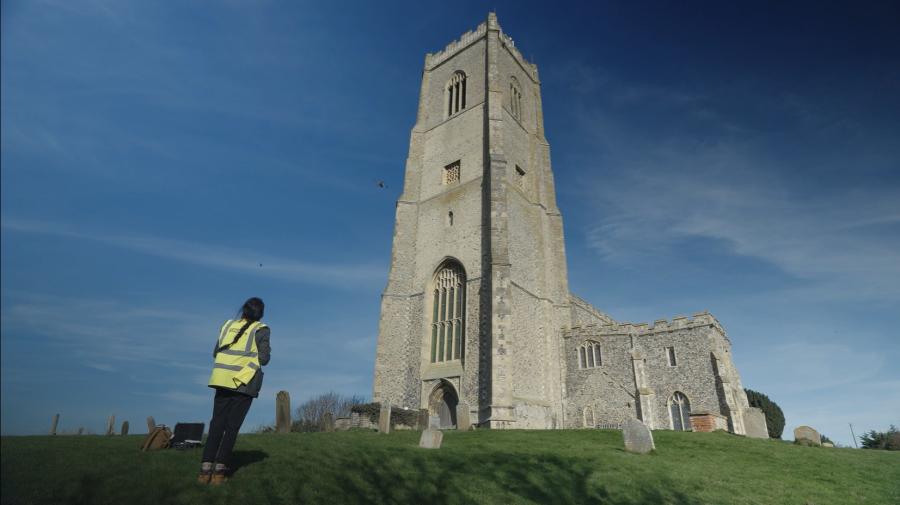
The beautiful Church of St Mary the Virgin in Happisburgh, Norfolk, dates back to the 14th century. Today, the Grade 1 listed church with its imposing tower and churchyard sits perched on a cliff top with the waves of the North Sea just 80 metres away.
With severe coastal erosion threatening to wipe out the historic site in a matter of decades, North Norfolk District Council commissioned our experts to undertake a community recording project to capture the church for posterity.
Technical manager, Tori Wilkinson, said:
"For coastal communities, living by the sea has always come with both challenges and opportunities. As the climate crisis drives more frequent and severe storms, the sea is eating away the coastline at a faster rate, posing a serious threat to communities and their heritage sites.
Archaeology has a vital role to play in supporting communities to respond to the threat the climate crisis poses to heritage sites. Through modern technology and storytelling, projects like this offer a way for communities to celebrate and preserve their heritage so that future generations can continue to discover these historic sites even once they are lost to the sea."
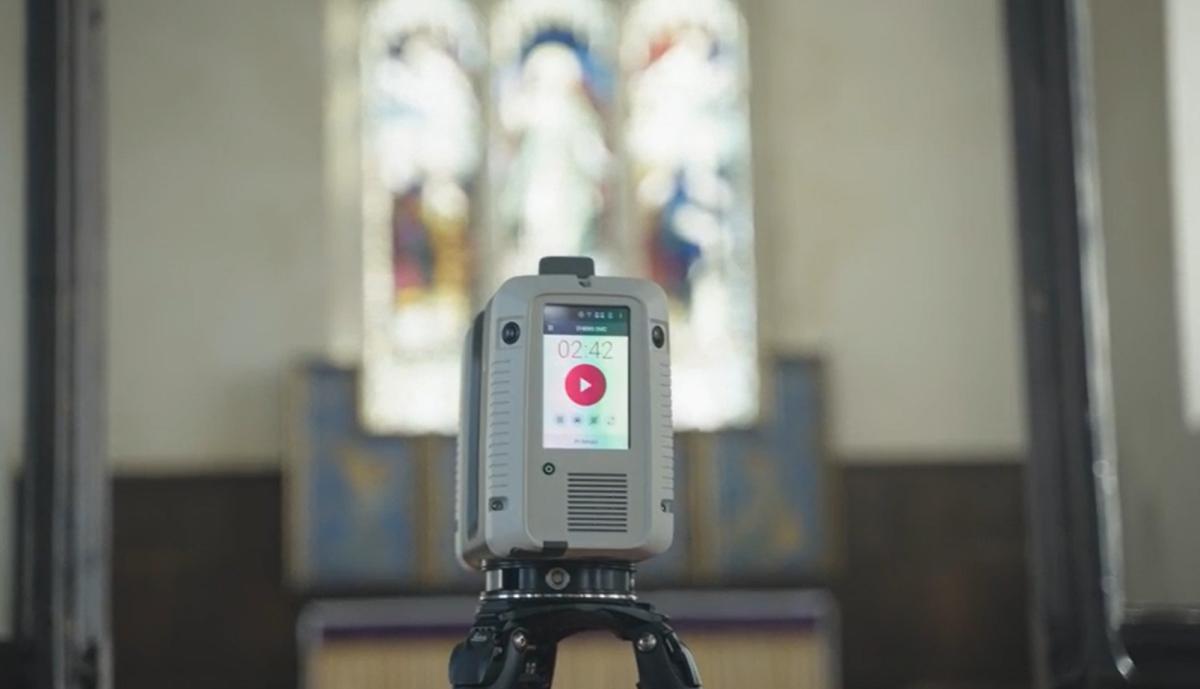
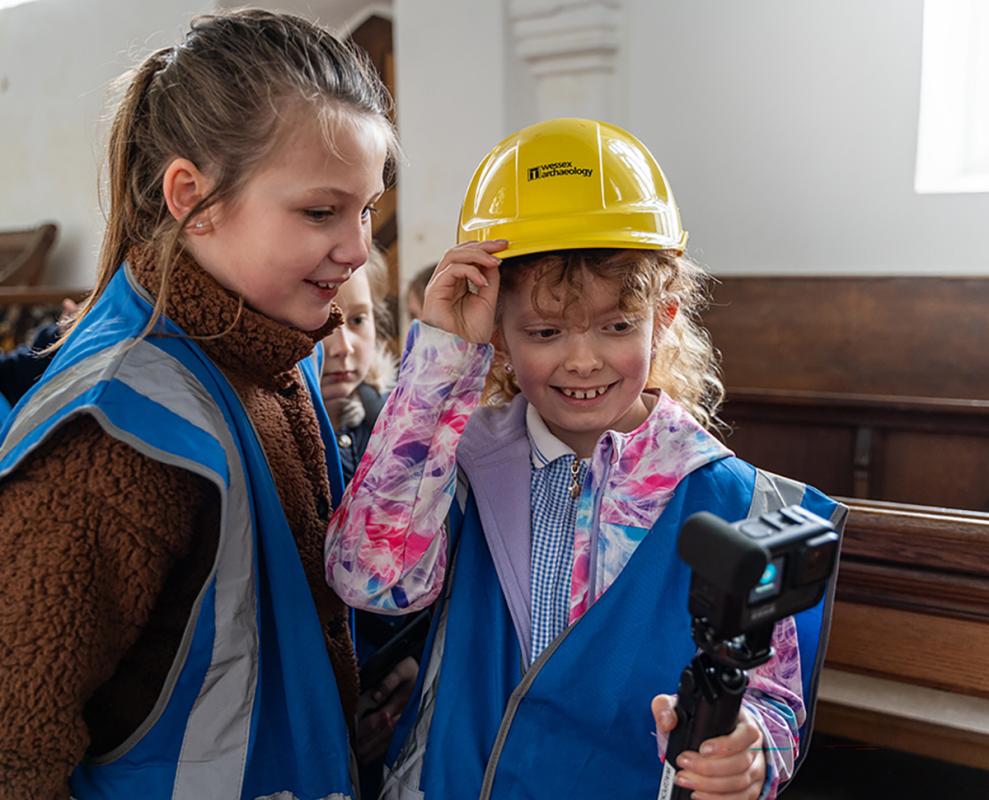
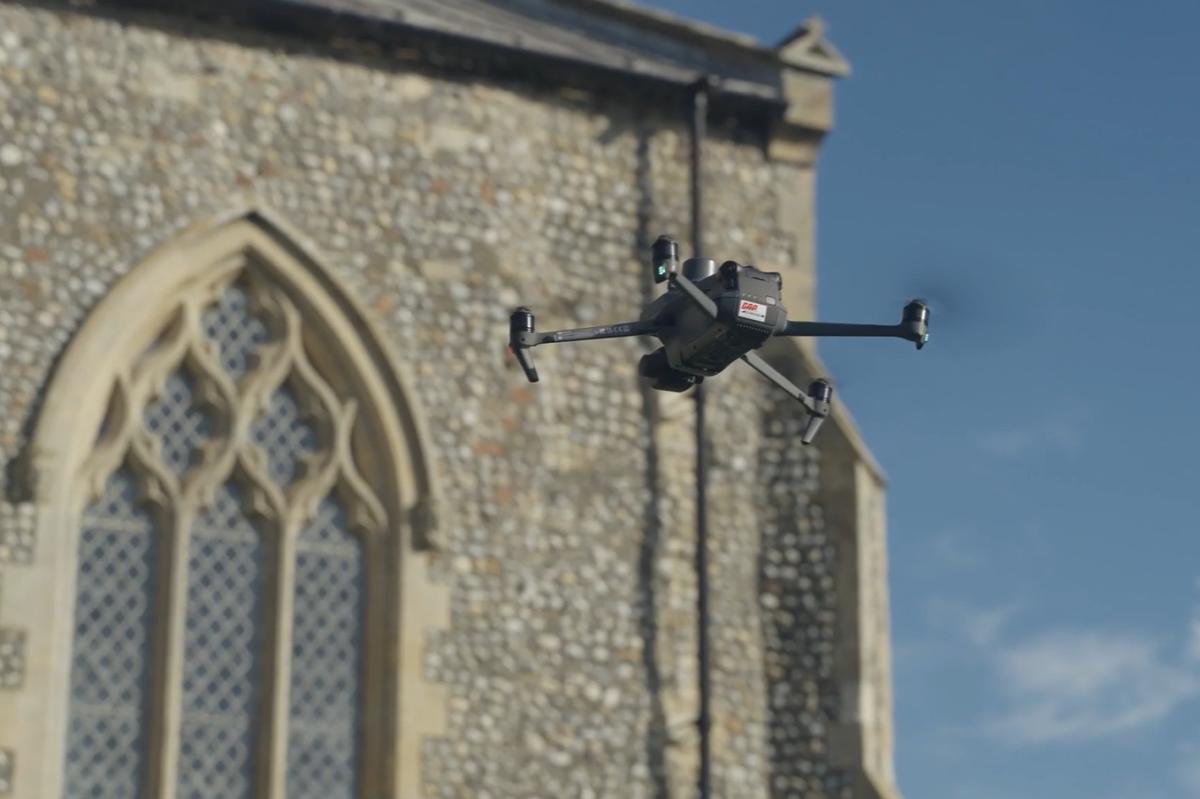
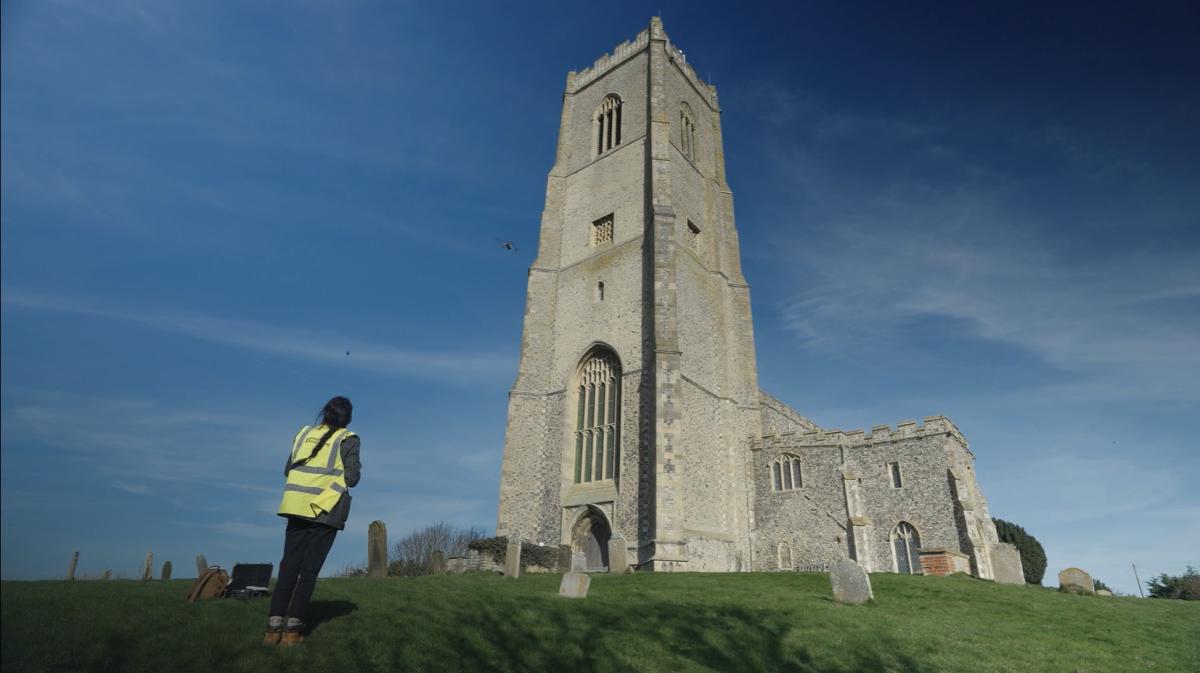
Top left to bottom right: drone surveys the church exterior, geospatial specialist stands in church yard undertaking a drone survey, laser scanner records church's interior, school children record the church with a camera.
Happisburgh's church has been at the heart of this vibrant community for more than 600 years, making it essential to capture the memories, stories, and voices of residents alongside recording the church. Local school children also contributed to the project, learning about and employing archaeological techniques and capturing memories.
Together with these oral histories, our experts conducted combined laser scanning and 3D photography of the church’s interior and exterior to create 3D models of the building and specific features within it.
A site of special local significance, the church has undergone significant change since its founding in the 14th century, although many original medieval features survive, including the 15th century font. The building underwent major redevelopment in the 19th century but suffered damage during WWII, with pieces of shrapnel still embedded in several pillars. The churchyard also contains significant historical elements, including a grave commemorating the loss of 119 crew members from the HMS Invincible, which sank off the nearby coast while on her way to join Admiral Lord Nelson’s fleet in 1801.
Many of these elements will feature in the videos and 3D visualisations that will be made freely available to the community for generations to come.
For more information or interviews, please contact press@wessexarch.co.uk.