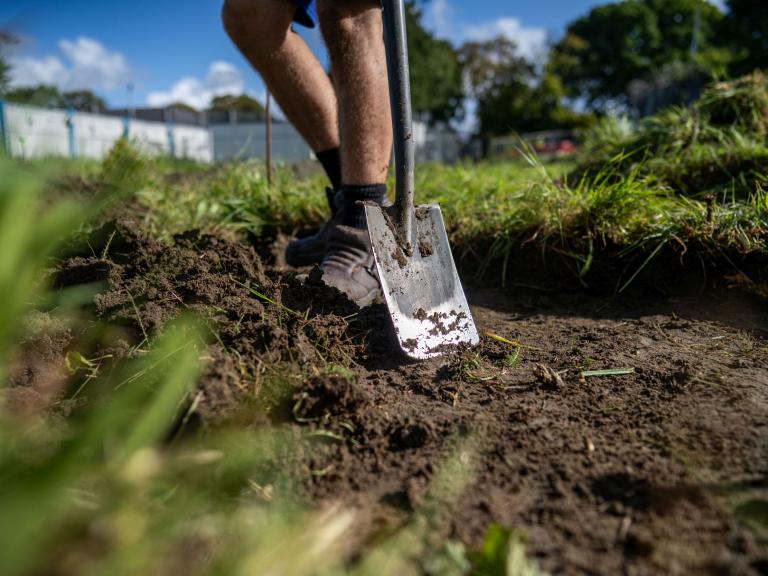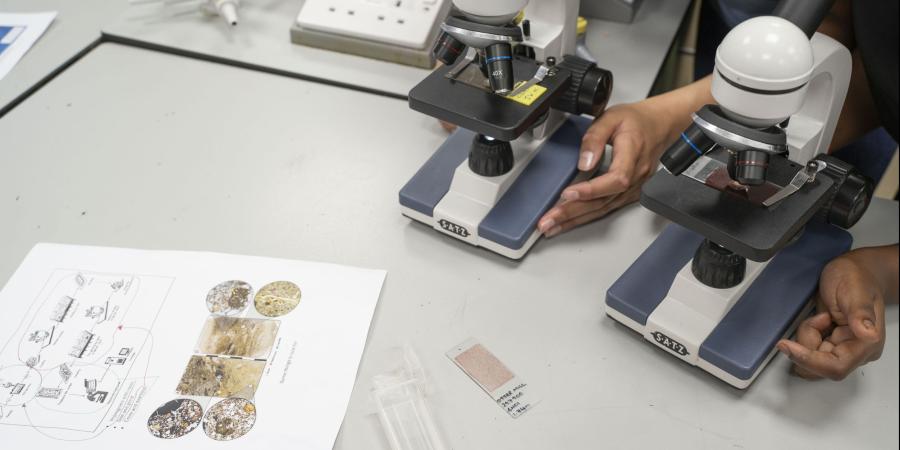
In recent years, there has been a decline in the number of secondary school students taking up chemistry. We knew we could help to turn that around. So, we set out to help young people discover that chemistry is fundamental to understanding and preserving our heritage. With support from The Royal Society of Chemistry Outreach Fund grant, we launched Chemistry in Schools: Past, Present, Future- a project designed to show secondary school students how the chemistry they learn in schools can go on to play a vital role in uncovering, preserving and understanding our past.
Chemistry Meets Heritage
To deliver the project, now in its second successful year, we partnered with Sheffield Springs Academy to carry-out hands-on workshops that bring chemistry to life through archaeology. Students have explored fascinating questions: Why do some materials survive for thousands of years while others crumble? What chemical processes cause rust, mould and decay? How do conservation scientists use chemistry to preserve ancient artefacts?
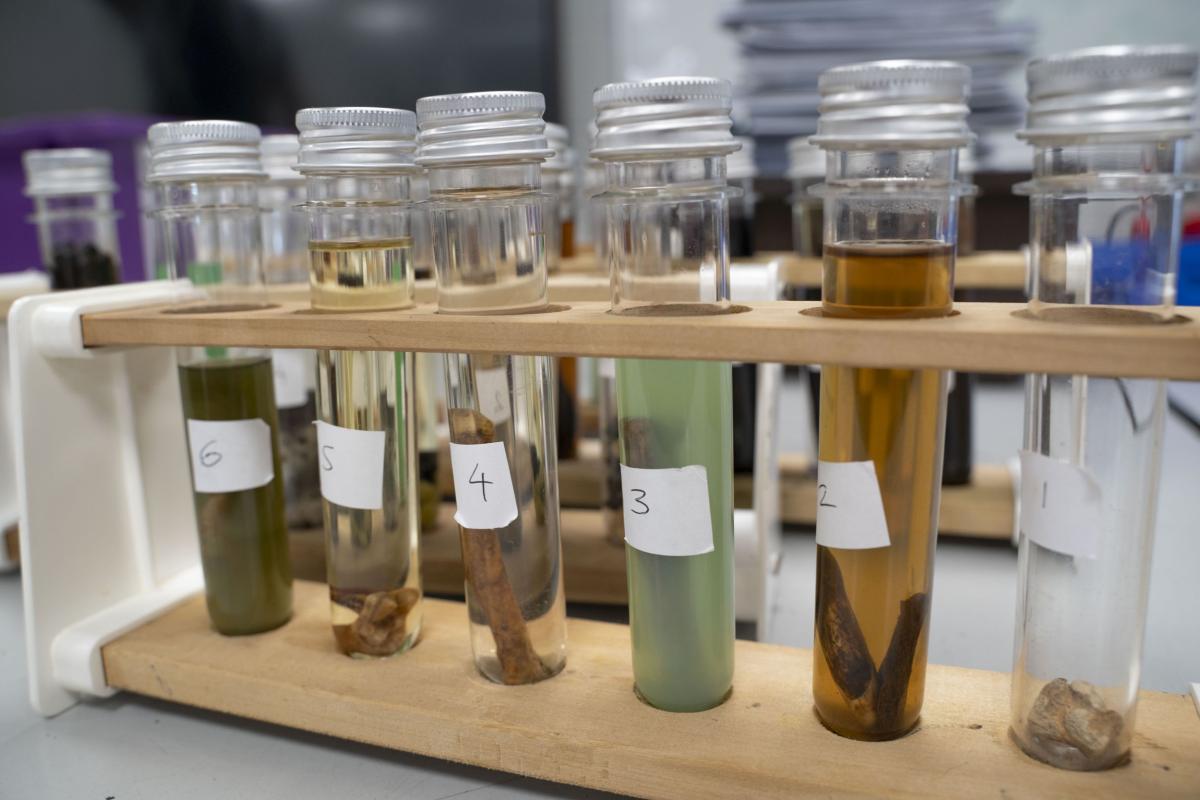
Students tested the rate of decay for a range of artefacts in different chemical solutions
Through practical experiments and microscope work, students have gained firsthand experience of environmental archaeology, geoarchaeology, and conservation techniques. They've set up material experiments, made predictions about preservation, and observed artefacts up close - all while learning about the chemical principles that make archaeology possible.
Student Champions Leading the Way
One of the project's most successful elements has been the Chemistry Champions programme. Eighteen Year 9 students took on the role of Chemistry Champions, developing confidence and leadership skills as they planned and delivered sessions for younger pupils.
The Chemistry Champions took charge of their own learning journey, debating which topics Wessex Archaeology specialists to invite from areas including environmental archaeology, geoarchaeology, fieldwork, finds and micromorphology. They went on to organise talks and evaluate their sessions. This peer-to-peer teaching approach has proven remarkably effective, with teachers noting visible excitement and enthusiasm from the Chemistry Champions when sharing their knowledge.
"One of the Chemistry Champions who said very little in class and missed the trial run sessions, confidently delivered an activity to year 7 students on their own," observed Natasha Bramall, Engagement Coordinator at Wessex Archaeology. "They were able to keep the year 7 students engaged for the length of their activity and fielded lots of questions."
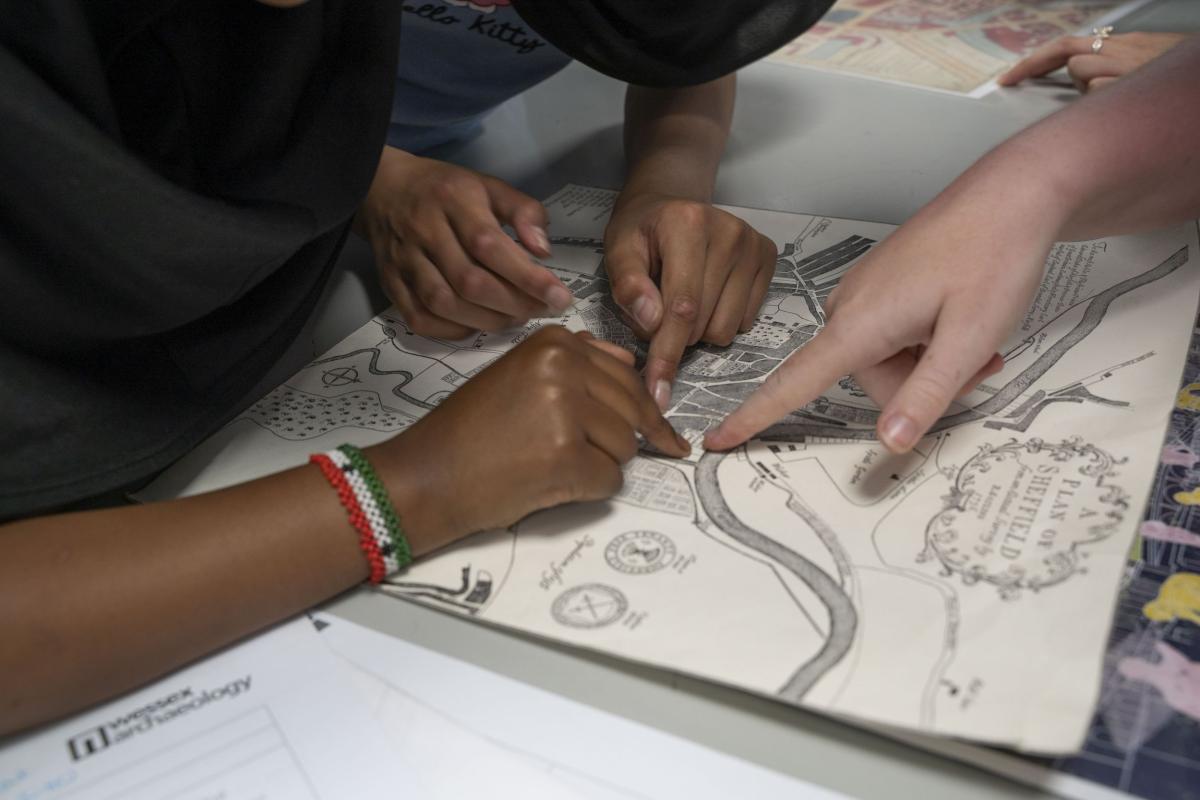
Chemistry Champions poured over old maps of Sheffield and its long-lost castle
Real-World Impact
Over two years, we engaged with 150 students across multiple year groups. Seven science teachers have now taken part in the programme, spreading awareness of archaeology's scientific foundations throughout the school's STEM department.
Working with Sheffield Springs Academy- a school where 58.2% of pupils are eligible for free school meals- the project has successfully engaged students from diverse backgrounds, opening their eyes to career possibilities they may never have considered.
Looking Ahead
The Past, Present, Future project has successfully engaged students showing them career pathways in archaeology, conservation and heritage. Through hands-on learning and peer leadership opportunities, it has the potential to inspire future generations of researchers, conservators, and heritage professionals.
The Past, Present, Future project is supported by The Royal Society of Chemistry Outreach Fund and delivered in partnership with Sheffield Springs Academy.