The heritage sector is under threat from skills shortages.
We want to take an active role in supporting skills development, ensuring that both our current teams and the next generation of professionals have access to the knowledge and training they need to thrive.
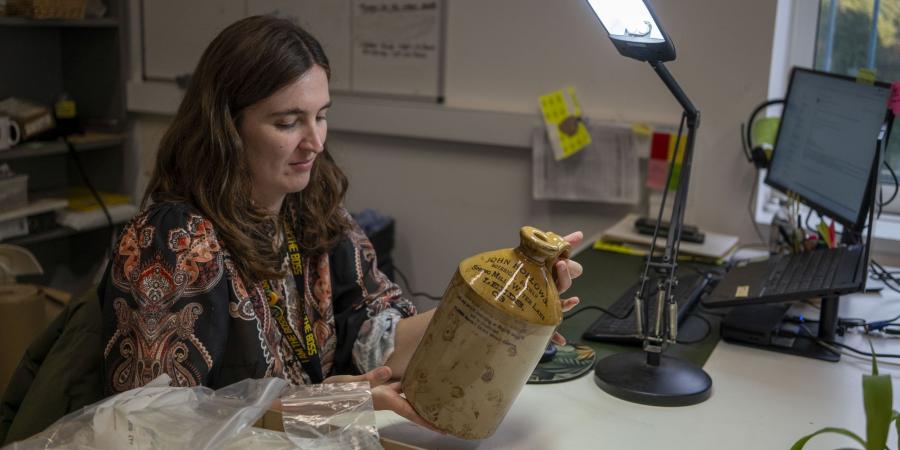
With that in mind, we have secured funding from Historic England’s Archaeology Mentoring Partnerships Programme, a scheme specifically aimed at supporting the development of post-excavation specialisms. As a result, two of our early career staff, Fiona Eaglesham, Environmental Laboratory Supervisor and Jasmine Porter, Finds Processing Supervisor, have now embarked on a year-long training programme to develop their skills in their chosen specialisms – archaeobotany and post-medieval pottery, and will be mentored by our in-house specialists.
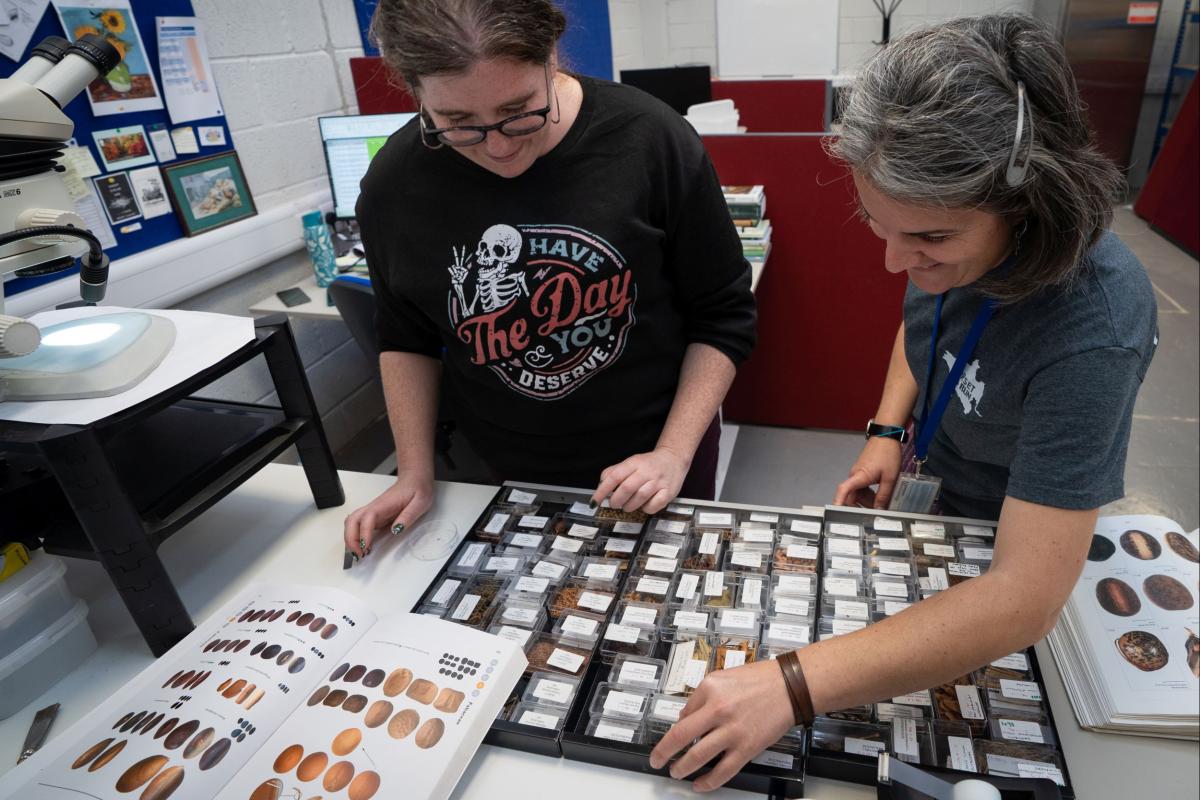
Above: Fiona and Inés look at archaeobotanical samples
The scheme is in its first year and responds directly to research from CIfA and the 2024 Historic Environment Skills and Careers Action Plan for England (HESCAPE), both of which indicate that archaeological specialisms particularly within post-excavation are priority skills areas that need to be addressed.
Jasmine’s training will focus developing her post-medieval pottery expertise with help from mentor and Ceramics Specialist, Lorraine Mepham. Over the course of 12 months, Lorraine and Jasmine will cover post-medieval pottery, whilst also looking at glass and clay pipes of the same period. By handling as much material as possible from our collections, Jasmine will be well-placed to build familiarity with the sorts of items that might be encountered on any given site, a vital skill for a budding specialist. Training will also include accessing useful literature which will put pottery in its social and economic context, learning to identify and understand what sort of vessel it might have come from, what that might have been used for, where it might have been made and how it got to the site. Finds are an important tool for building understanding of a site, and this training will provide the skills and knowledge needed to be able to bring all of this information together.
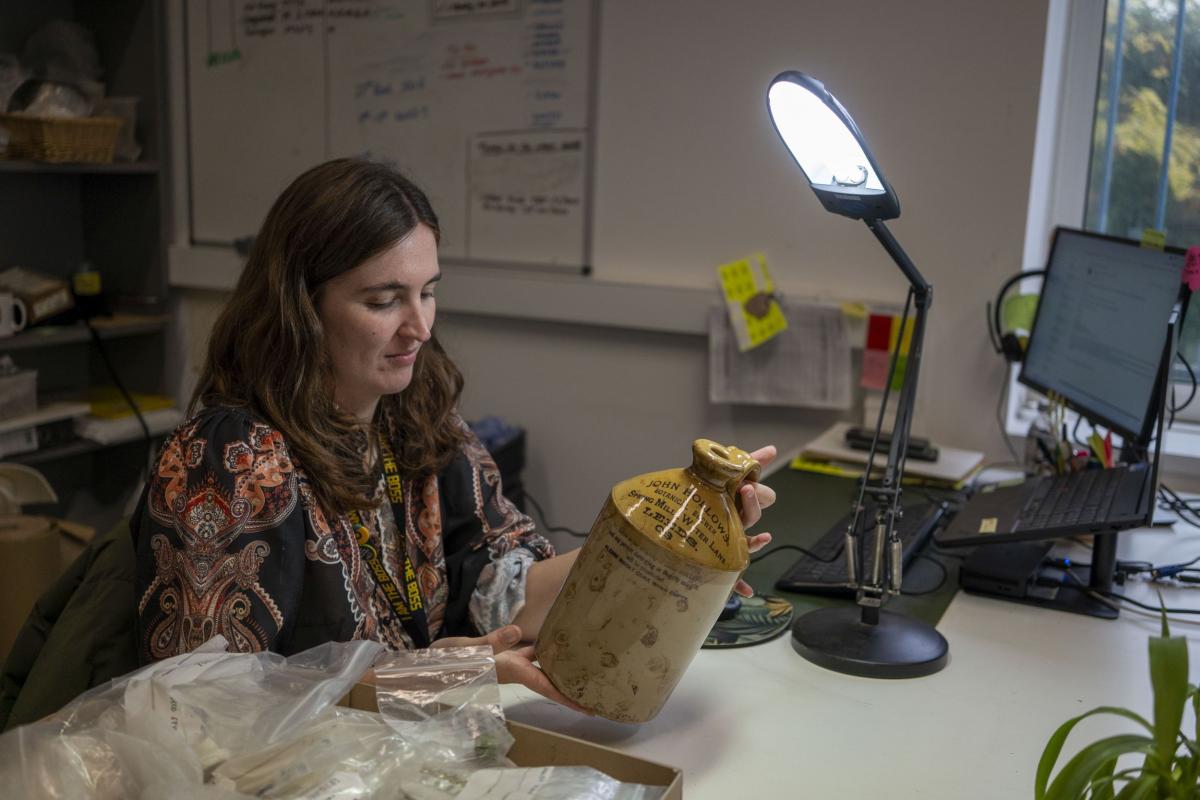
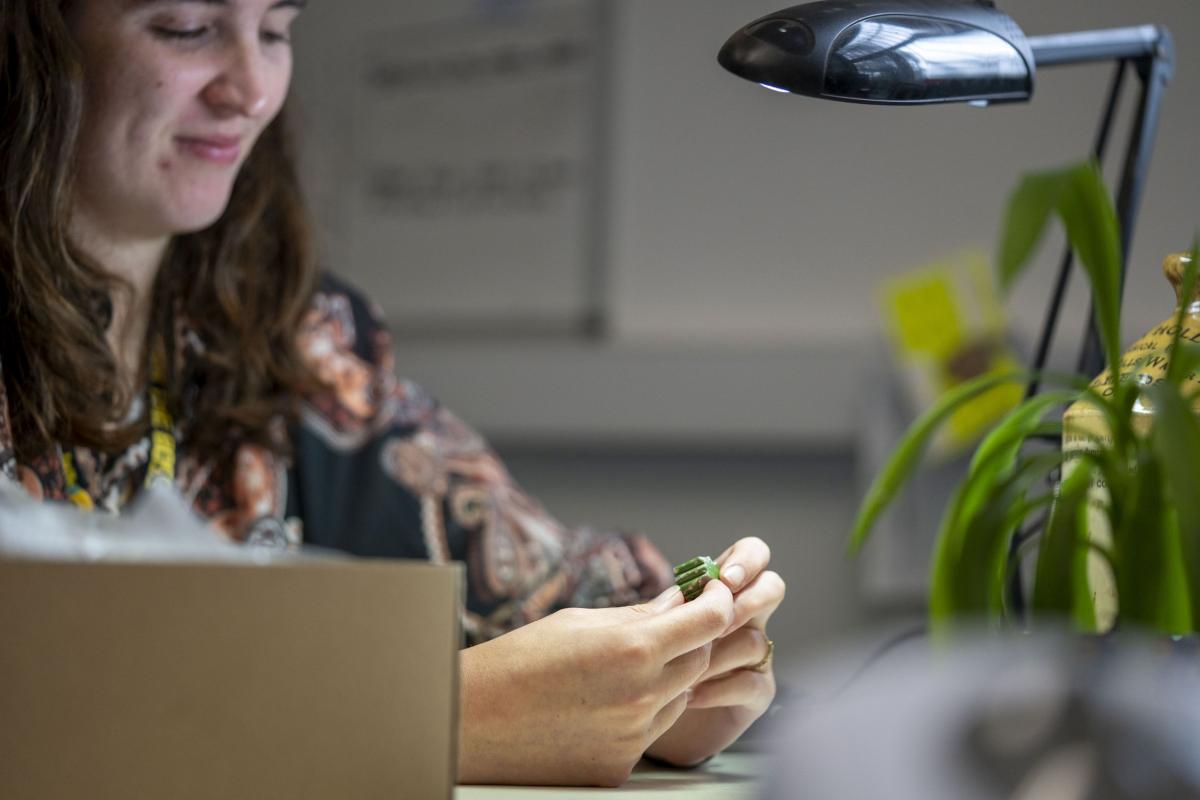
Above: Jasmine studies post-medieval pottery
Jasmine shared that: ‘Ever since I worked on Sylvester Gardens and Marshalls Mills, I’ve had an interest in post-medieval finds and the story they tell. So, when Bob [Clarke] and Lorraine [Mepham] suggested using the Historic England grant to turn that interest into a specialism I was thrilled! So far I’m really enjoying getting to grips with all the pottery types and what different vessels are used for. The stoneware vessels are my current favourites as each type has its own character!’
Fiona’s training will be in archaeobotany, under the guidance of Ed Treasure, Environmental Archaeologist and Inés López-Dóriga, Principal Environmental Archaeologist. Fiona’s training will stand her in good stead to work towards a career in archaeobotany, learning how to identify a vast range of seeds and grain types under the microscope.
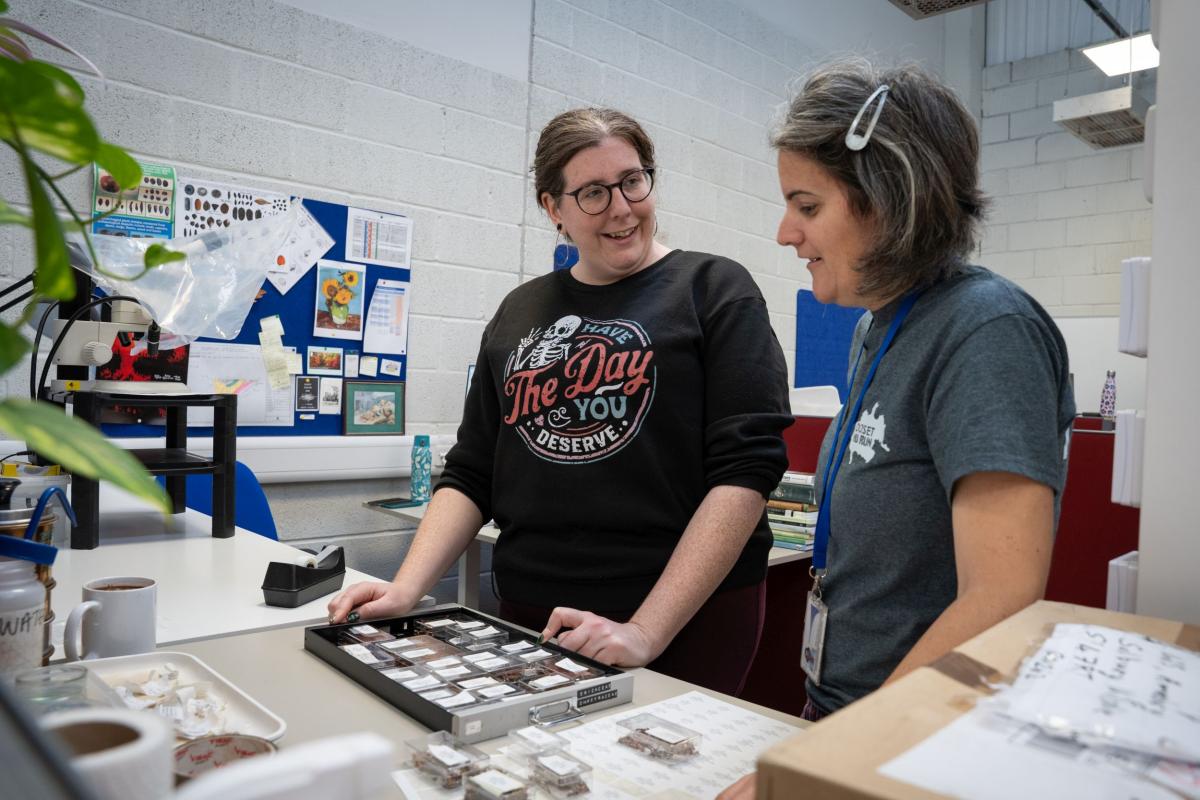
Above: Fiona and Inés discuss identification techniques
Fiona will work with Ed and Inés to gain a solid foundational understanding of archaeobotany through different types of activity including assessment, reporting and producing recommendations for further analysis. A central element of the training will be looking at taxonomic and morphological identification skills. This will be a hands-on way of learning, using our reference collection in Amesbury and splitting this so that it can also be utilised in the Sheffield office too.
In addition to analytical techniques, Inés and Ed will guide Fiona to write clear archaeobotanical reports and become familiar with industry-standard structures and content, making recommendations for further work and understanding the internal processes. This is all essential for contributing effectively to Wessex Archaeology's reporting outputs and of course for supporting clients.
Fiona shared that: ‘I've had an interest in archaeobotany for a very long time and completed a masters in environmental archaeology back in 2010. So, to be able to refresh and improve my skills, with the help of the HE funding, is a fantastic opportunity. It's early days but I've enjoyed learning from the other specialists their tips and tricks and seeing how different species can indicate things like a different environment or time period.’
We look forward to sharing more about the Archaeology Mentoring Partnerships Programme and Fiona and Jasmine’s journey as their training continues into 2026.