50.783325650542, -1.0543130116497
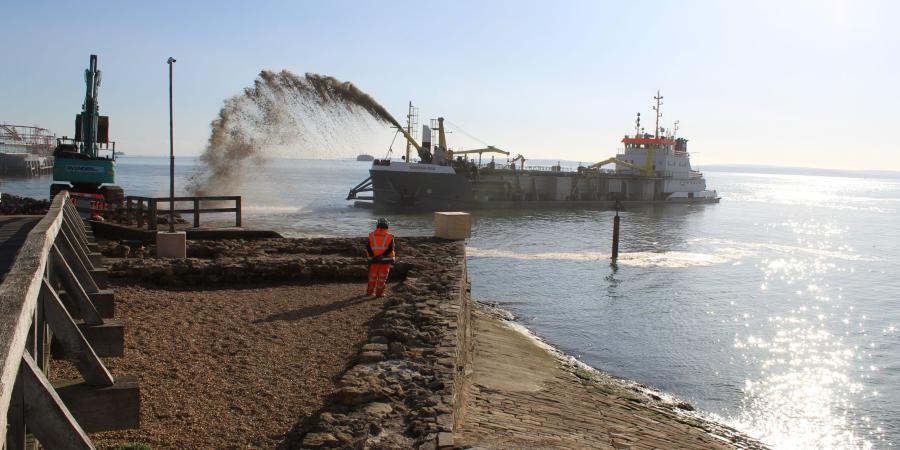
Unlike other development projects, where we are often brought in during the later stages of planning, we have played a key role in shaping this scheme, which spans 4.5km from Old Portsmouth to Eastney. The area is rich in heritage - assets include three Scheduled Monuments plus 74 listed structures - and our priority has been making sure all these assets are conserved alongside the new defences.
Expert heritage advice and services to support the scheme
Initially, we were brought into the project to offer geoarchaeology expertise and to provide heritage support regarding the area’s archaeological potential. However, owing to our broad range of heritage services, we quickly became a key member of the integrated design team, and when planning permission was granted we were appointed the main heritage contractor.
Following our initial desk-based heritage assessment, which formed a baseline for all subsequent investigations, we provided expert advice, identifying the heritage considerations and appropriate archaeological mitigation strategies.
We attended site on a frequent basis to monitor the construction activity and record any exposed archaeology. We also undertook historic building recording and photogrammetry of Portsmouth’s former city defences - a Scheduled Monument.
Stories and discoveries from the scheme
Effective stakeholder liaison to ensure a smooth project delivery
Having early involvement resulted in us identifying design plans and methodologies that may have a detrimental impact on heritage assets. This enabled the project team to avoid challenges by regulators such as Historic England and the local planning authority. We met regularly with the client and the principal contractor to discuss the forward programme and method statements. This gave the client confidence when liaising with Historic England, the county archaeologist or the appointed conservation officer and prevented proposals being rejected, allowing the scheme to continue progressing within the scheduled time frame.
One of the key heritage concerns for the project was the Scheduled Monuments within the scheme footprint, including the remains of the old Portsmouth city defences and Southsea Castle. The management of these heritage assets required close liaison with Historic England to obtain Scheduled Monument Consent.
Discovering significant archaeological remains
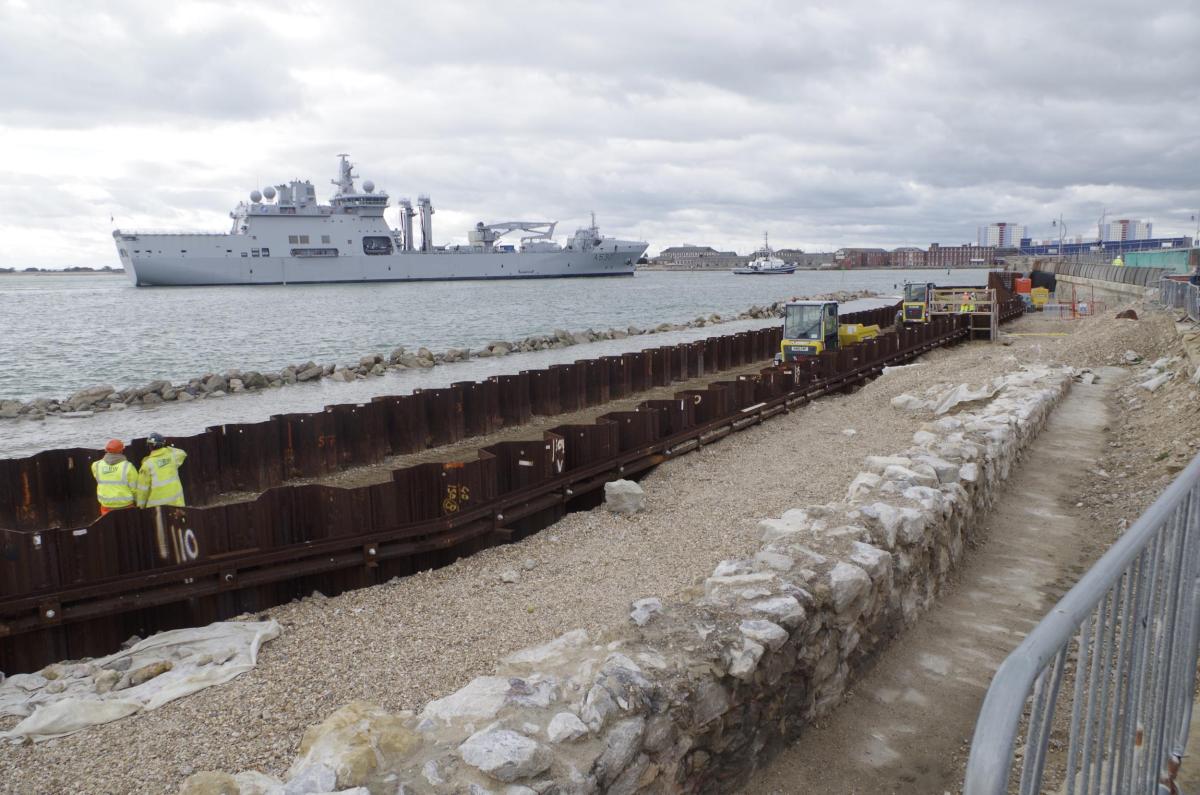
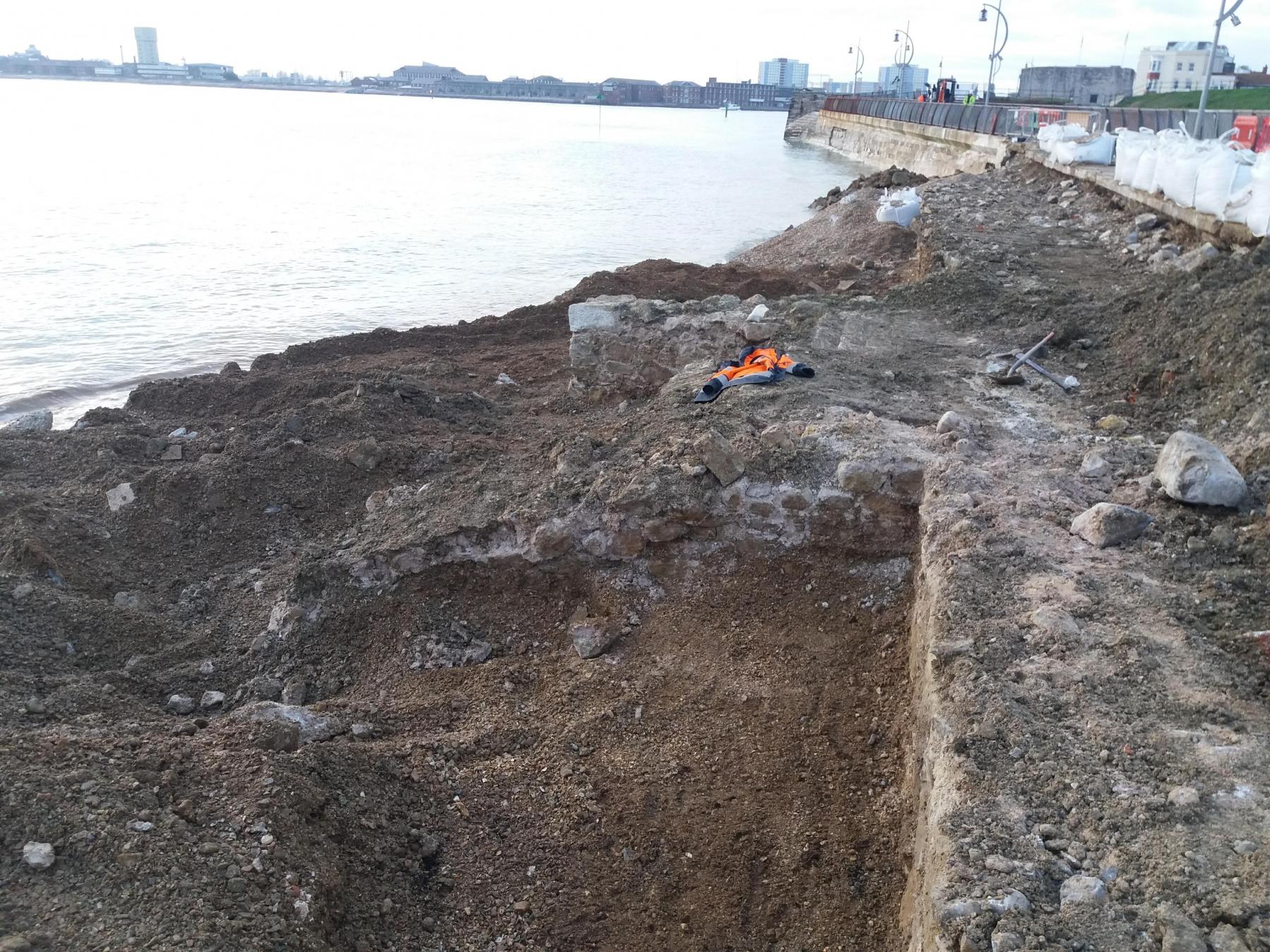
In the section of the scheme alongside the former Portsmouth defences, we discovered what we believe is an outer moat wall, which would have served as a military defence in the 17th century and featured incised masonry marks. We also uncovered sea defences from the same period, including a wall and a possible slipway which is depicted on 18th century mapping.
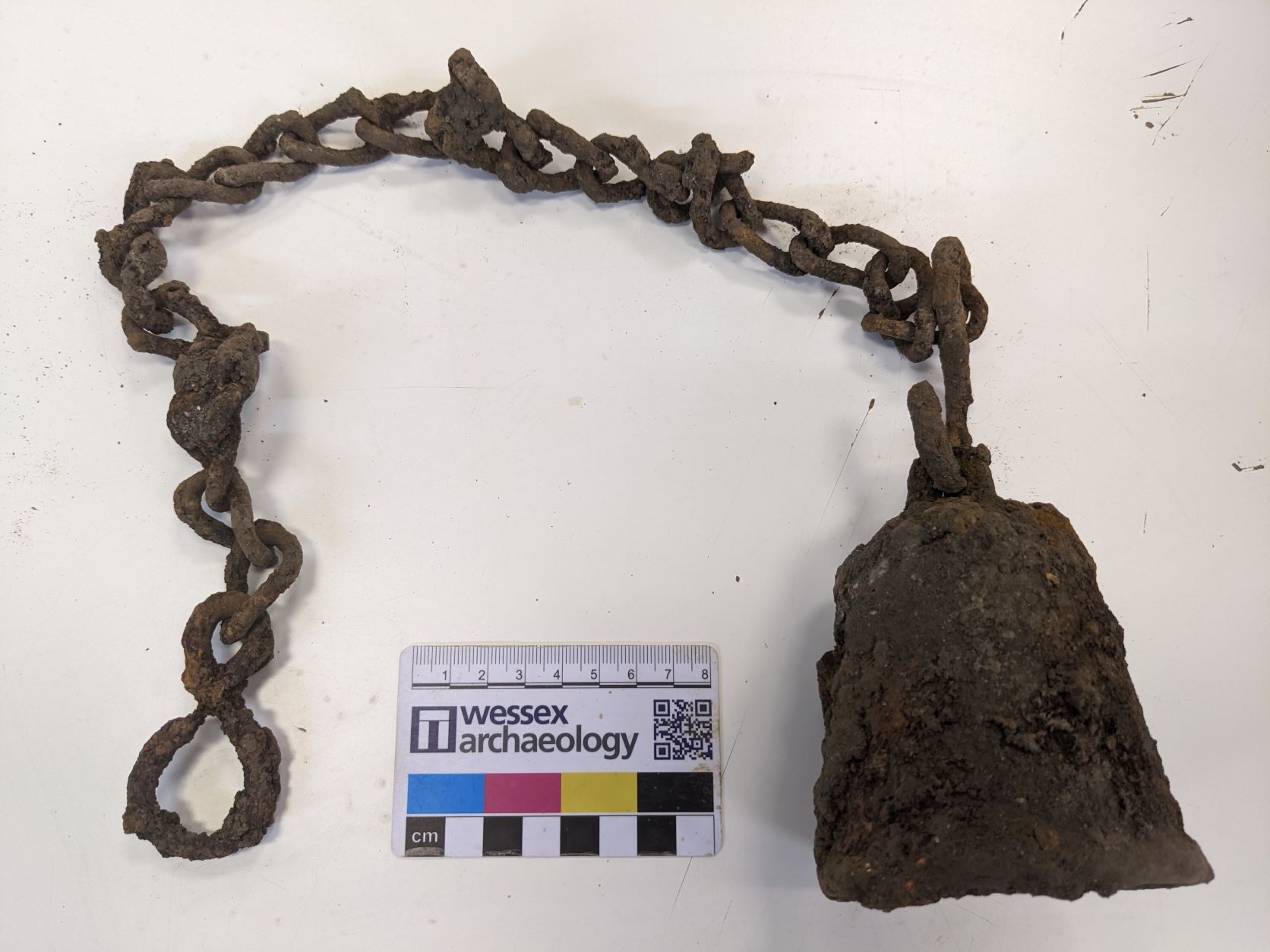
To the southeast, we discovered the remains of an earlier phase of Southsea Castle and the Edwardian Promenade, as well as a copper bell which was likely used at a nearby military site in the Victorian era. Following gentle cleaning by our conservator to remove corrosion from the bell’s fragile copper elements, our finds experts conducted x-rays to see if the bell had any identifying marks. Unfortunately, none were discovered so we cannot be certain of the bell’s origins.
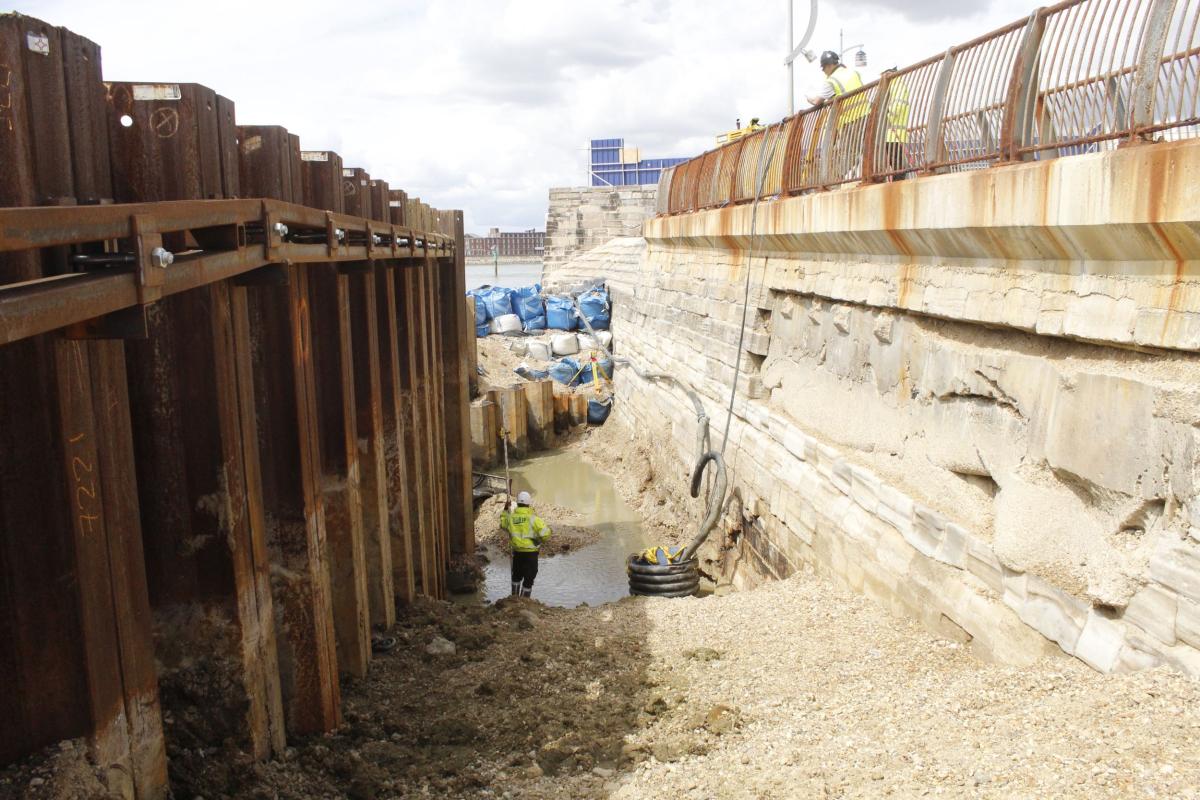
Above: Construction of sheet pile defences in front of Long Curtain Moat
The remains of all the historic structures were recorded and where possible preserved in situ.
Our experts have written a range of specialist reports, including reports on the historic building recording and the geoarchaeological modelling, and will create a final publication once the entire scheme is built. Throughout the project, we provided support with client engagement events and delivered talks to local community groups.
Below: A preserved section of historic wall at long curtain moat